Hormonal Acne Treatment: Causes, Tips & Effective Solutions
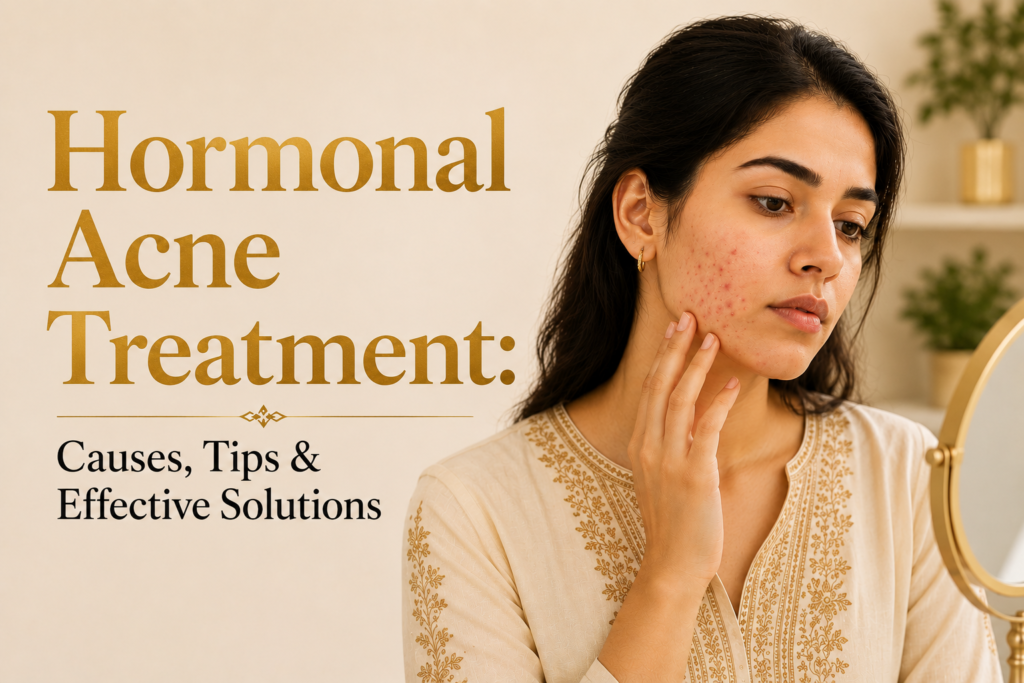
Adult acne has a way of catching people off guard. The skincare routine is consistent, the diet is reasonable, sleep is not the problem, and yet a firm, tender bump keeps returning to the same spot along the jawline, almost on schedule, month after month. It is tempting to blame the last indulgent meal or an unwashed pillowcase, but in most cases, neither is the real cause. This recurring pattern has a name: hormonal acne. It is not a sign of poor hygiene or a failed diet. It is a hormonal issue, and treating it effectively starts with understanding what triggers it in the first place. This article covers the causes, the available treatment options, and a realistic recovery timeline to help make sense of a condition that can otherwise feel confusing and relentless. Quick Answer Summary Effective hormonal acne treatment rarely relies on a single product. It combines topical medication, such as retinoids or benzoyl peroxide, with hormone-regulating measures such as anti-androgens or birth control where medically appropriate, alongside adjustments to diet, stress levels, and daily skincare. Anyone researching how to treat hormonal acne that resurfaces around the jawline or chin should expect a dermatologist to begin with a full skin assessment, occasionally supported by hormone-level testing, before recommending a plan built around the individual’s cycle and skin type. Visible improvement typically appears within six to twelve weeks, with more complete results by the third or fourth month. Because these breakouts are cyclical by nature, treating them with unrelated over-the-counter products tends to produce inconsistent results. A structured, professionally guided plan works considerably faster. What Is Hormonal Acne? Hormonal acne refers to breakout activity driven primarily by fluctuations in androgens (hormones present in every body, though in varying amounts). When androgen levels shift, the skin’s oil glands respond by producing more sebum than usual. That excess oil clogs pores, allows bacteria to multiply, and leads to the inflammation that shows up as a breakout. Unlike the surface-level pimples common in adolescence, hormonal breakouts tend to sit deeper in the skin. They are often more painful, slower to resolve, and more likely to leave lingering marks. What Causes It? Because the trigger sits inside the body, identifying it is the real work of the first consultation. Several factors can be responsible, and in most patients more than one is acting at the same time, which is why a single-cause explanation seldom holds up. The most common hormonal acne causes are these: Types of Breakouts Identifying the cause explains why the skin is breaking out. The type of lesion present explains what the treatment then has to do about it, and the two together decide the plan. Type What It Looks Like How It Behaves Blackheads and whiteheads Small blocked pores Not painful, but persistent Papules Small red bumps with no head Tender to touch Pustules Red bumps with a white centre Sore and inflamed Nodules Hard lumps deep under the skin Painful, slow to clear Cysts Large, soft, swollen lesions Very painful, high scarring risk Who Is Affected Acne is typically associated with adolescence, yet hormonal acne treatment for adults has become an increasingly common clinical need, particularly among women in their twenties, thirties, and forties. Men experience it too, though the pattern is less predictable. For many adults who assumed clear skin was a fixture of the past, this resurgence can be genuinely disheartening. It is, however, also a well-understood and treatable condition. Treatment Options for Hormonal Acne The question of how to treat hormonal acne rarely has a single-product answer. A plan that lasts works in three stages: calm the inflammation on the surface, correct the hormonal trigger underneath, and finally repair any marks or scars left behind. The order matters, especially in hormonal acne treatment for adults. Adult skin is thinner and drier than teenage skin and marks more easily, so strong drying products often make the situation worse rather than better. Comparison of Treatment Options Treatment How It Works Best Suited For Time to Results Course Needed Topical retinoids (adapalene, tretinoin) Keeps pores clear by speeding up cell renewal Mild to moderate acne 8–12 weeks Nightly, long-term Benzoyl peroxide / azelaic acid Reduces acne bacteria and redness Inflamed bumps, dark marks 4–8 weeks Daily Spironolactone (tablet) Blocks the hormone signal reaching oil glands Women with jawline acne, PCOS 10–12 weeks Ongoing, monitored Combined oral contraceptives Steadies monthly hormone swings Cycle-linked flares About 3 months Prescribed long-term Antibiotics (short course) Settles sudden, severe inflammation Acute flare-ups 4–6 weeks One course only Chemical peels Clear blocked pores and lighten marks Blackheads, pigmentation 2–3 weeks 4–6 sessions Laser and light therapy Reduces oil gland activity Acne that resists creams 4–6 weeks 4–8 sessions Microneedling with radiofrequency Rebuilds collagen in scarred areas Pitted scars, uneven texture 6–8 weeks 3–6 sessions Isotretinoin (tablet) Shrinks oil glands for the long term Severe, deep cystic acne 8–16 weeks 5–8 months Patients often ask which of these is the best treatment for hormonal acne. There is no universal winner. The best treatment for hormonal acne is the one matched to the hormone profile, the skin type, and the amount of scarring already present. Two people with the same number of bumps may need completely different plans. Habits That Support the Results Treatment does most of the work, but daily routine decides how quickly it shows. Results & Recovery Timeline Sessions needed. Most in-clinic plans run to four to eight sittings, spaced two to four weeks apart, with creams or tablets continuing alongside for three to six months. Downtime. Very little. Chemical peels cause light flaking for two to four days. Laser sessions leave mild redness that fades within a few hours. Microneedling needs about a day or two of rest. Most patients return to work the same day. Expected improvement. Period What Changes Weeks 1–3 Skin feels smoother; a short purging phase is possible Weeks 4–6 Fewer new bumps, less soreness Weeks 8–12 Roughly 50–70% fewer active breakouts Months 4–6 Dark marks fade,
Types of Acne Scars and Their Best Treatments
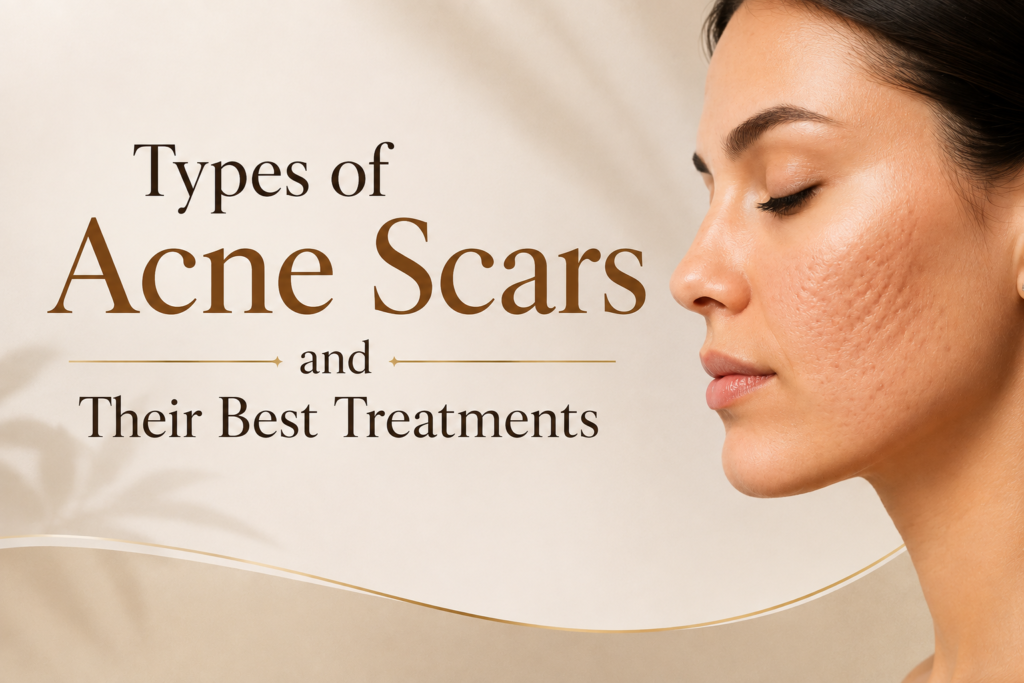
Types of acne scars generally fall into four categories: ice pick, boxcar, rolling, and hypertrophic or keloid scars, each requiring a distinct treatment approach for meaningful improvement. The best treatment for acne scars depends on scar depth, skin type, and the extent of collagen damage beneath the surface. Options range from chemical peels and microneedling to laser resurfacing and dermal fillers, often used in combination for optimal results. A dermatologist’s assessment is essential, as an acne scar removal treatment that works well for shallow scarring may be entirely ineffective for deeper, pitted scars. What Are Acne Scars? Acne scars are permanent changes in the skin’s texture that develop after inflamed breakouts damage the underlying tissue. Unlike temporary redness or dark spots, which typically fade on their own, true scarring involves a loss or excess of collagen, resulting in visible depressions or raised areas on the skin. Causes Scarring occurs when the skin’s healing process is disrupted during or after an inflammatory breakout. Common contributing factors include: Types Understanding the different types of acne scars is the first step toward choosing the right treatment: Who Is Affected Acne scarring is not limited to those with severe acne alone; even moderate breakouts, if picked at or left untreated for long periods, can leave lasting marks. Adults revisiting old acne scars years later, as well as teenagers currently managing active breakouts, both commonly seek treatment. Acne Scar Treatment Options Compared Selecting the right acne scar treatment options depends heavily on the scar type identified during a dermatological assessment. The table below outlines commonly used approaches. Treatment Best For How It Works Downtime Chemical Peels Superficial scarring, discoloration Exfoliates outer skin layers to promote renewal 1–3 days Microneedling Rolling and boxcar scars Stimulates collagen production via controlled micro-injuries 1–2 days Laser Resurfacing Ice pick, boxcar, and rolling scars Removes damaged skin layers and boosts collagen remodeling 3–7 days Dermal Fillers Rolling scars Adds volume beneath depressions to smooth the surface Minimal Subcision Rolling and tethered scars Releases fibrous bands causing the depression 2–4 days Steroid Injections Hypertrophic and keloid scars Flattens raised tissue by reducing excess collagen None Most dermatologists recommend combining two or more of these methods, since scars rarely belong to a single category and often respond better to a layered approach. Results & Recovery Timeline Sessions Needed Depending on the severity and scar type, most patients require four to six sessions of laser or microneedling treatment, spaced three to four weeks apart, to see substantial improvement. Downtime Recovery varies by procedure. Chemical peels and microneedling generally involve one to three days of mild redness, while laser resurfacing may require slightly longer downtime, particularly for deeper resurfacing sessions. Expected Improvement Noticeable smoothing of the skin’s texture is typically visible after the second or third session, with continued improvement over several months as collagen remodeling progresses. Full results are usually assessed around the six-month mark, since collagen production continues well after the final session. Safety & Who Should Avoid It Side Effects Common, generally mild side effects associated with acne scar treatments include: Contraindications Certain treatments may need to be avoided or adjusted for individuals who: A thorough consultation helps determine which treatments are appropriate and safe for individual skin conditions. Frequently Asked Questions 1. What are the main types of acne scars, and how are they different? The main types of acne scars are ice pick, boxcar, rolling, and hypertrophic or keloid scars. They differ in shape, depth, and how they form, which is why each requires a tailored treatment approach. 2. What is considered the best treatment for acne scars? There is no single universal answer, as the best treatment for acne scars depends on scar type and severity. Laser resurfacing and microneedling are widely regarded as effective for most textural scars, while filler injections work well for rolling scars. 3. How to treat acne scars that have been present for years? Older scars can still respond well to treatment. Options for how to treat acne scars long after they’ve formed include microneedling, laser resurfacing, and subcision, often combined for more complete results. 4. Is acne scar removal treatment permanent? Most treatments produce long-lasting improvement rather than complete removal, particularly for deeper scars. Combining procedures generally yields the most durable results. 5. How many sessions are typically needed for visible results? Most patients notice meaningful improvement after four to six sessions, though this varies based on scar depth and the treatment method chosen. 6. Can acne scar treatment options be combined for better results? Yes. Combining treatments, such as microneedling with subcision or laser resurfacing, often produces better outcomes than relying on a single method alone. 7. Does treating active acne first help before starting scar treatment? Yes. Addressing active breakouts before beginning scar treatment reduces the risk of new scarring and allows the skin to heal more predictably during the procedure. About the Doctor Dr. Vani Veggalam — Founder & Managing Director, Cleo Skin Clinic, Hyderabad Conclusion Living with acne scars can feel discouraging, especially when the acne itself has long since cleared. Understanding the types of acne scars and treatments available makes it far easier to set realistic expectations and choose a plan that actually addresses the underlying skin damage. With an accurate diagnosis and a combination of appropriate procedures, visible, lasting improvement is achievable for most scar types. Related pages: Chemical Peels | Laser Treatments | Medi Facials Further reading: Cleo Skin Clinic Blog 📞 Ready to Say Goodbye to Acne Scars? Stop guessing and start healing. Book a one-on-one consultation with Dr. Vani Veggalam at Cleo Skin Clinic, Kukatpally, and get a scar-treatment plan built just for you. 👉 Book Your Consultation Now | 📟 Call: +91 96669 20777 / +91 95500 05777 Open 9 AM – 10 PM, Monday to Saturday.
Why Does Acne Keep Coming Back Even After Treatment ?
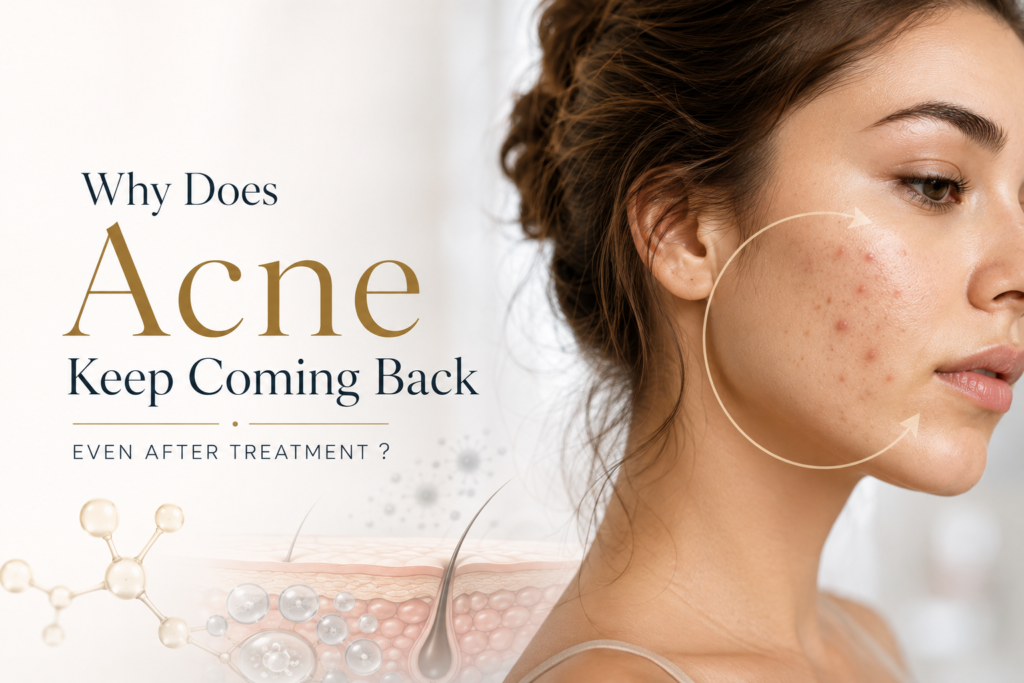
Why acne keeps coming back is a question with a fairly consistent answer: acne is a cyclical, multifactorial condition rather than a one-time infection that resolves permanently after a single course of treatment. Hormonal activity, clogged pores, bacterial overgrowth, and lifestyle factors continue to influence the skin long after visible symptoms subside. Recurring acne most often results from hormonal fluctuations, inconsistent skincare practices, premature discontinuation of treatment, or an unaddressed underlying trigger. Effective, lasting improvement requires identifying the root cause with a qualified dermatologist and following a structured, long-term maintenance plan rather than treating acne as an isolated event. What Is Recurring Acne? Recurring acne refers to the reappearance of breakouts after a period of clearer or improved skin, frequently affecting the same regions of the face, such as the jawline, chin, or cheeks. In most cases, this pattern does not indicate that a previous treatment failed outright; rather, it suggests that an underlying contributing factor remains active beneath the surface. Causes There is rarely a single cause behind persistent breakouts. The most common causes of recurring acne include: Types Recurring acne can present in several distinct forms: Who Is Affected While acne is commonly associated with adolescence, a significant proportion of adults in their late twenties, thirties, and forties also experience it. Hormonal changes, occupational stress, and environmental pollutants contribute to breakouts regardless of age. Why Acne Returns After Treatment Understanding why acne returns after treatment requires looking beyond the treatment itself. In most cases, the issue is not that the treatment was ineffective, but that it addressed the visible symptoms without resolving the underlying biological trigger. Topical creams and short courses of antibiotics typically reduce active breakouts and inflammation; however, they do not always regulate the hormonal signals or oil gland activity responsible for the initial flare-up. Once treatment stops, these underlying processes can resume, allowing new breakouts to form. This is a key reason acne keeps coming back after treatment for a large number of patients: the surface-level symptom is managed, but the internal driver remains unaddressed. Additional contributing factors include: Treatment Options Compared Selecting the best treatment for recurring acne depends on the severity of the condition, skin type, and the pattern of previous breakouts. The comparison below outlines commonly recommended options. Treatment Best For How It Works Downtime Topical Retinoids Mild to moderate acne Unclogs pores and accelerates cell turnover Minimal; mild peeling possible Oral Antibiotics Inflammatory acne Reduces bacterial load and inflammation None Hormonal Therapy Hormonal or adult acne Regulates androgen-driven oil production None Chemical Peels Comedonal acne, uneven texture Exfoliates and clears pore blockages 1–3 days of mild redness Laser & Light Therapy Active acne, associated scarring Targets bacteria and reduces oil gland activity Minimal Isotretinoin Severe cystic acne Reduces oil gland size long-term Requires medical monitoring Effective persistent acne treatment typically involves a combination of these approaches rather than relying on a single method. Results & Recovery Timeline Sessions Needed Most persistent acne treatment plans require four to six in-clinic sessions, spaced two to four weeks apart, alongside a consistent home-care regimen. Downtime Modern acne treatments generally involve minimal downtime. Chemical peels may cause mild redness for a day or two, while laser sessions typically allow patients to resume normal activities the same day. Expected Improvement Visible improvement is generally observed between the third and fourth week of treatment, with substantial clearing by weeks eight to twelve. Complete stabilization, particularly for hormonal acne, may take three to six months. Safety & Who Should Avoid It Side Effects Commonly reported, generally mild side effects include: Contraindications Certain treatments may not be suitable for all individuals. Modified or alternative treatment may be required for those who: A thorough consultation with a qualified dermatologist is essential before initiating any treatment plan. Frequently Asked Questions 1. Why does my acne keep coming back even after using prescribed creams? Prescribed creams often address visible symptoms rather than the underlying hormonal or bacterial trigger. Without resolving the root cause, breakouts are likely to recur once treatment is discontinued. 2. How can I prevent acne from coming back permanently? Consistency is essential. Following a dermatologist-approved routine, avoiding picking or squeezing breakouts, managing stress levels, and completing the full course of prescribed treatment all contribute to long-term results. 3. Is recurring acne a sign of an underlying hormonal issue? It can be, particularly when breakouts are concentrated along the jawline or worsen in correlation with the menstrual cycle. A hormonal evaluation can help clarify this. 4. Can diet contribute to acne’s coming back patterns? For some individuals, diets high in sugar or dairy can worsen acne. This varies between individuals, so tracking personal triggers is recommended. 5. How long does it take to see results from persistent acne treatment? Most patients notice visible improvement within four to eight weeks, with more complete results typically evident by the three-month mark. 6. Does stress genuinely contribute to acne relapses? Yes. Elevated stress increases cortisol levels, which in turn stimulates oil production — a common reason breakouts intensify during periods of high stress. 7. Should treatment be discontinued once the skin clears? No. Stopping treatment prematurely is one of the most common reasons acne returns. A maintenance plan, even at reduced frequency, helps keep underlying triggers under control. About the Doctor Dr. Vani Veggalam — Founder & Managing Director, Cleo Skin Clinic, Hyderabad Conclusion Recurring acne is rarely a reflection of treatment failure; rather, it signals that an underlying trigger has not been fully resolved. Whether the cause is hormonal, stress-related, or linked to an incomplete treatment course, understanding why acne keeps coming back is the essential first step toward long-term improvement. With an accurate diagnosis, an appropriate combination of treatments, and consistent follow-through, sustained clarity is a realistic and achievable outcome. Related pages: Chemical Peels | Laser Treatments | Medi Facials Further reading: Cleo Skin Clinic Blog 📞 Tired of Acne Keeps Coming Back Again and Again? Stop the guesswork and start real healing. Book a one-on-one consultation with Dr. Vani
Best Treatment for Acne Scars: Laser vs Microneedling
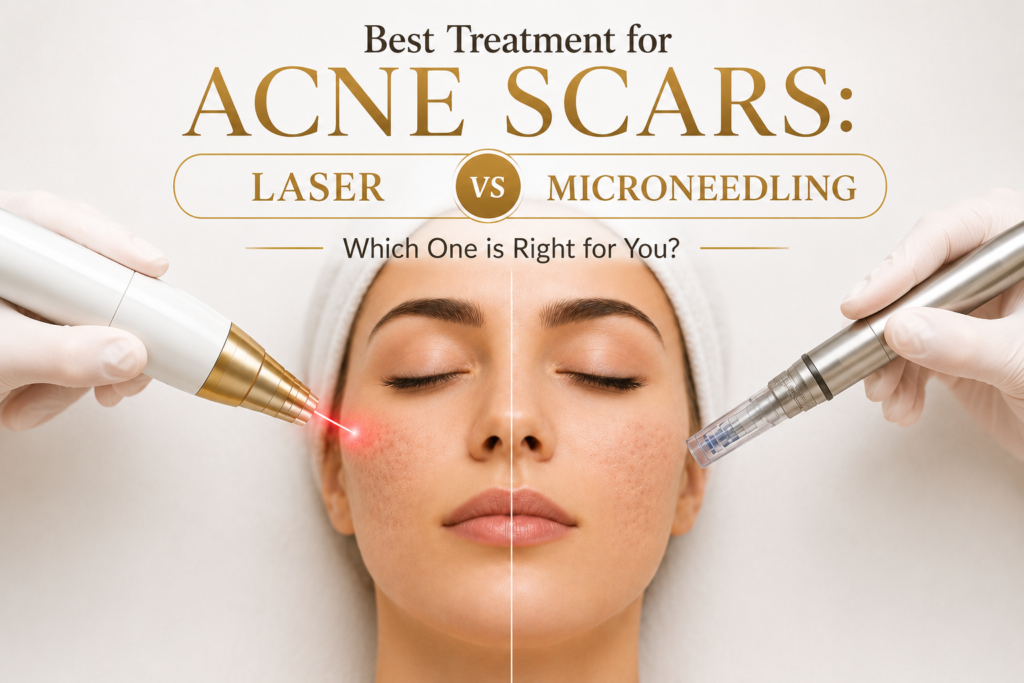
You finally won the battle against breakouts. The pimples are gone. But every morning, the mirror still shows the marks they left behind — little pits, dents, and shadows that makeup can hide but never truly erase. Sound familiar? You’re not alone, and here’s the good news: those marks are treatable. Let’s talk about the best treatment for acne scars and settle the big question — laser or microneedling? The best treatment for acne scars depends on your scar type and skin tone. Laser resurfacing works faster on deep, stubborn scars and usually needs 3–5 sessions, but carries a higher risk of pigmentation on Indian skin. Microneedling (especially RF microneedling) is gentler, safer for darker skin tones, and needs 4–6 sessions with minimal downtime. Many patients get the best results from a combination plan. A dermatologist will examine your scars — boxcar, ice pick, or rolling and recommend the right mix. Most people see 50–80% improvement within 3–6 months of starting treatment. What Are Acne Scars, Really? Think of your skin as a smooth bedsheet. When acne inflammation goes deep, it damages the collagen underneath — the “mattress” holding that sheet up. As the skin heals, it either produces too little collagen (creating a dent) or too much (creating a raised bump). That uneven repair job is what we call an acne scar. Causes Types of Acne Scars Scar Type What It Looks Like How Common Ice pick Narrow, deep holes — like a tiny needle poked the skin Very common Boxcar Broad dents with sharp edges, like chickenpox marks Common Rolling Wavy, uneven texture that shows in side lighting Common Hypertrophic Raised, thick bumps above the skin Less common Post-inflammatory marks Flat brown or red spots (technically not scars) Extremely common Who Is Affected? Acne scars are far more common than you’d think. Studies on over 24,000 people show that almost half of all acne sufferers get some scarring. That’s nearly 1 out of every 2 people. And it’s not just severe acne — even mild pimples can leave marks. Teenagers and young adults get scars the most, but it can happen at any age. Family history matters too. If your parents had acne, your chances of scarring go up a lot. Treatment Options: Laser vs Microneedling Here’s where the real conversation begins. These are the two most trusted acne scar treatment options recommended by dermatologists worldwide — and each works differently. Laser Treatment for Acne Scars — Benefits and Risks A fractional laser (like CO2 or Erbium) sends tiny beams of light into the skin. Each beam makes a very small, controlled injury — so small you can’t see it. Your skin then rushes to heal these spots. While healing, it builds fresh collagen. This new collagen fills up the scars from inside, and the skin slowly becomes smoother. Think of it like re-plastering a wall with small holes. The laser tells your skin exactly where to do the repair work. Benefits: Risks: So that is the full picture of laser treatment for acne scars — benefits and risks. In simple words, it gives strong results, but only when done by a trained doctor who knows how to use it safely on your skin type. Microneedling for Acne Scars — How It Works In this treatment, a small device with very fine needles is moved over your skin. The needles make tiny holes that you cannot see. Your body sees these tiny holes as small wounds and starts healing them. During healing, it makes new collagen — the protein that keeps skin firm and smooth. Slowly, over a few weeks, this new collagen fills the scars from below. That is microneedling for acne scars — how it works in simple terms. RF (radiofrequency) microneedling is an upgraded version. Along with the needles, it sends mild heat deep into the skin. This heat pushes the skin to make even more collagen. And because the heat goes below the surface, the top layer of skin stays safe — which is why it works so well for darker skin tones. Benefits: minimal downtime, very low pigmentation risk, suitable for almost every skin type. Limitations: results build gradually, and very deep scars may still need a laser boost. Fractional Laser vs RF Microneedling for Acne Scars — Comparison Table Feature Fractional Laser RF Microneedling Best for Deep boxcar & ice pick scars Rolling scars, sensitive & darker skin Sessions needed 3–5 4–6 Downtime 5–7 days 1–2 days Pigmentation risk (Indian skin) Moderate Low Pain level Moderate (numbing cream used) Mild to moderate Cost per session Higher Moderate Result speed Faster Gradual but steady When people ask about fractional laser vs RF microneedling for acne scars, the honest answer is: you often don’t have to pick just one. Many dermatologists use both — laser for the deep scars, and RF microneedling to smooth the overall skin texture. Together, they give better results than either one alone. How to Choose the Right Acne Scar Treatment for Your Skin Type Wondering how to choose the right acne scar treatment for your skin type? Keep it simple: Never self-diagnose from Instagram reels. Your skin deserves a proper, in-person assessment. Results & Recovery Timeline Let’s talk about acne scar removal: recovery time and results — because knowing what to expect keeps you patient and positive. Sessions Needed Downtime Expected Improvement Collagen is a slow builder — it keeps remodelling for up to 6 months after your last session. Here’s a realistic map of acne scar removal: recovery time and results: One patient described it beautifully: “I stopped reaching for concealer without even realising it.” That’s the kind of quiet win these treatments deliver. Safety & Who Should Avoid It Both procedures are dermatologist-reviewed acne scar treatments with decades of clinical backing. Still, no procedure is for everyone. Possible Side Effects Who Should Avoid or Postpone Treatment This is exactly why dermatologist-reviewed acne scar treatments should only be done at a proper clinic not a salon. The
Side Effects of Laser Hair Removal – Myth vs Reality
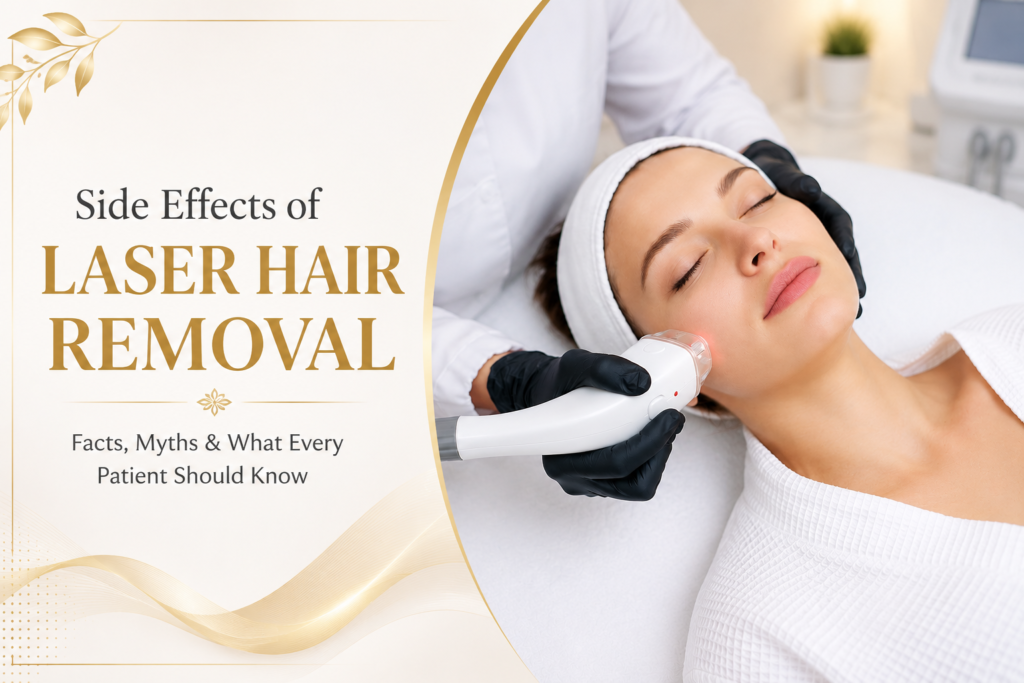
Worried about laser hair removal side effects? Here is the honest picture. When performed by a qualified dermatologist, the procedure is remarkably safe, and most reactions are mild and short-lived, slight redness, warmth, or puffiness that settles within hours. Serious complications like scarring or burns are rare and almost always linked to untrained operators or wrong laser settings. Claims about cancer, infertility, or organ damage have no scientific basis whatsoever. So, is laser hair removal safe? Yes, provided your skin type is assessed properly, the right technology is used, and you follow simple aftercare. The real risk is not the laser; it is choosing the wrong hands to operate it. Understanding Laser Hair Removal Side Effects Here is a familiar scene. Someone finally decides to book their first laser session after years of waxing pain. Then they make the mistake of searching online at midnight and suddenly they are reading horror stories about burnt skin, permanent scars, and worse. By morning, they had cancelled the appointment. If that sounds like you or someone you know, this article is for you. Let us separate genuine medical facts from internet fiction, calmly and clearly. Definition Laser hair removal side effects are the skin reactions that can occur after a laser session. During treatment, the laser delivers light energy that is absorbed by the pigment in the hair and converted to heat, disabling the follicle. Because heat is involved, the surrounding skin can react temporarily — much like it does after a day in the sun. These reactions are the body’s normal response, not a sign that something has gone wrong. Causes Why do side effects happen at all? A few clear reasons: Notice something? Most causes are avoidable. The laser itself is rarely the villain; misuse of it is. Types of Side Effects Doctors group reactions into two clear categories. Temporary side effects of laser hair removal (common, harmless, self-resolving): Long-term side effects of laser hair removal (rare, usually preventable): Who Is Affected? Anyone can experience mild, temporary reactions — that is normal physiology. However, some people carry higher risk: those with deeper skin tones treated on unsuitable machines, patients on photosensitising medication, anyone with a fresh tan, and clients of unregulated salons where “technicians” learn on the job. This is exactly where dermatologist laser hair removal advice becomes invaluable. A specialist identifies your risk profile before the laser ever touches your skin. Myth vs Reality: The Comparison Every Patient Deserves The internet is generous with fear and stingy with facts. This table sets the record straight on the most widespread laser hair removal myths: The Myth The Reality “Laser causes skin cancer” The laser uses non-ionising light that does not alter DNA. No credible study links it to cancer. “It damages internal organs” The light penetrates only a few millimetres — just deep enough to reach follicles, nowhere near organs. “It causes infertility” Physically impossible; the energy never reaches beyond the skin layer, even in bikini-area treatments. “Burnt skin is guaranteed” Burns are rare and tied to wrong settings or fake machines — not to the procedure itself. “It’s unsafe for Indian skin” Nd:YAG and advanced diode lasers are specifically designed for medium and deeper complexions. “The pain is unbearable” Most patients describe a mild rubber-band snap; modern cooling systems make it gentler than waxing. “Side effects last forever” The overwhelming majority of reactions fade within 24–48 hours. Reading that table, one theme repeats: laser hair removal risks shrink dramatically when technology, expertise, and skin assessment come together. The horror stories almost always trace back to one missing ingredient — a qualified doctor. Results & Recovery Timeline Sessions Needed Most patients need 6–8 sessions spaced 4–6 weeks apart, since the laser only disables follicles in their active growth phase. Hormone-sensitive areas like the chin may need a few more. Importantly, side effect risk does not accumulate with sessions — each visit carries the same low, well-managed risk. Downtime Practically zero. Expect the treated area to look slightly flushed for a few hours — comparable to a brisk walk on a warm afternoon. Most patients return to work immediately. What you should avoid for 24–48 hours: hot showers, gyms, saunas, swimming pools, and direct sunlight. Expected Improvement And here is a lovely bonus many patients discover — ingrown hairs and razor bumps vanish, so the skin often looks better after laser than before it. Safety & Who Should Avoid It Laser hair removal safety rests on three pillars: correct diagnosis of your skin type, the right laser wavelength, and disciplined aftercare. When all three are present, complication rates drop to a fraction of a percent. Managing Side Effects: The Role of Aftercare Good laser hair removal aftercare is simple but non-negotiable: Contraindications: Who Should Postpone or Avoid Treatment A genuine dermatologist will screen for every one of these before treatment. If a clinic does not ask about your medications and medical history, walk out — that is the biggest red flag in this entire field. Frequently Asked Questions 1. Is laser hair removal safe for the face? Yes. Facial treatments are among the most commonly performed procedures worldwide. The eyes are shielded with protective goggles, and energy levels are calibrated for delicate skin. So if you have been wondering, “is laser hair removal safe for my upper lip or chin?” — the answer, under medical supervision, is a confident yes. 2. How long does redness after laser hair removal last? Typically a few hours, occasionally up to a day. Redness after laser hair removal is the most common reaction and fades on its own — a cool compress speeds things along. 3. Are there any proven long-term side effects of laser hair removal? Decades of clinical use show no systemic long-term harm. The rare long-term side effects of laser hair removal, such as pigment changes, are linked to improper technique — not to the technology itself and are largely preventable with correct laser selection. 4. What are the biggest laser hair
Is Laser Hair Removal Permanent?
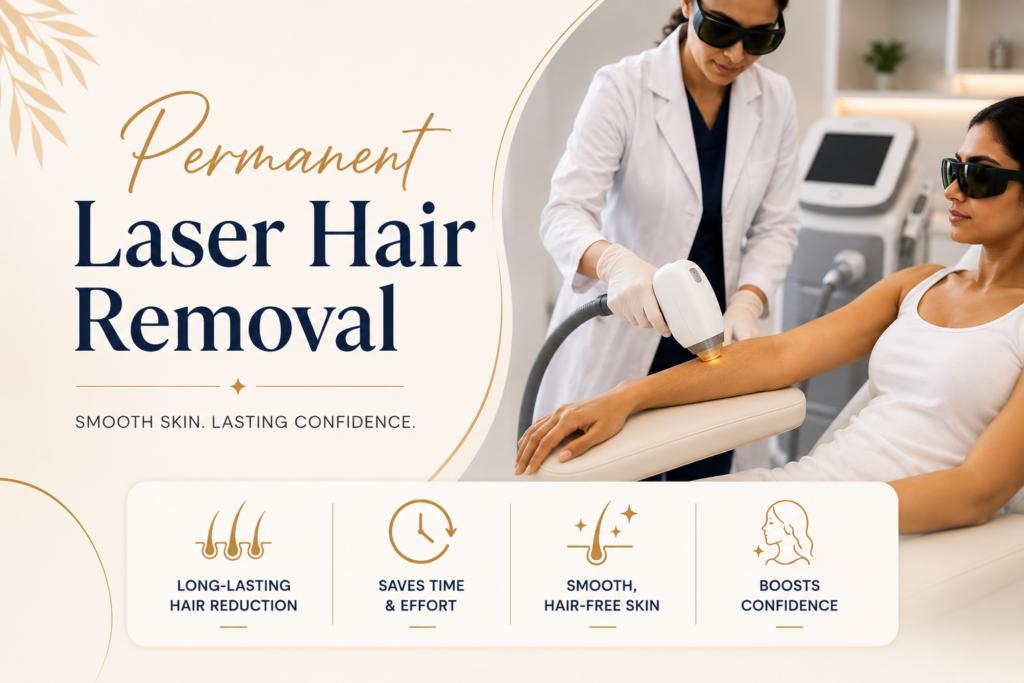
Laser hair removal offers long-term hair reduction of 80–95%, which is why it is widely regarded as the closest option to permanent results available today. The laser targets hair follicles during their active growth phase and disables them, so treated follicles typically never produce hair again. However, hormonal changes can activate new follicles over time, which is why most people need 6–8 sessions followed by an occasional maintenance visit. In practical terms, permanent laser hair removal means freedom from daily shaving and monthly waxing, with only a brief touch-up once a year for most patients. What Is Laser Hair Removal? For many people, hair removal is a routine that quietly consumes hours every month. A working professional may shave every morning before office. A bride-to-be may schedule waxing appointments around every important event. Over the years, this adds up to significant time, money, and discomfort, which is why so many patients eventually look for a lasting solution. Definition Laser hair removal is a medical cosmetic procedure that uses concentrated beams of light to remove unwanted hair. During the treatment, the laser emits light energy that is absorbed by the melanin (pigment) in the hair. This light converts to heat, which travels down the hair shaft and damages the follicle — the small sac in the skin from which hair grows. Once a follicle is sufficiently damaged, it loses its ability to produce new hair, which delays or permanently stops future growth in that spot. Unlike shaving, which cuts hair at the surface, or waxing, which pulls it from the root only for it to regrow, a laser hair removal treatment works at the source of growth itself. It is performed on areas such as the face, underarms, arms, legs, back, and bikini line, and is safe for both men and women when carried out under dermatological supervision. Causes of Unwanted Hair Understanding why unwanted hair appears helps explain why lasers are so effective. The most common causes include: Medically, excessive growth is called hypertrichosis, while male-pattern growth in women is known as hirsutism. Both respond well to laser treatment when managed properly. Types of Lasers Used Not all lasers are the same, and the right choice depends on your skin tone and hair type: The laser targets terminal hair — the dark, thick, coarse kind — because its melanin absorbs light energy effectively. Fine, light vellus hair responds less well, which is why a professional assessment before treatment matters. Who Needs This Treatment? Nearly everyone deals with unwanted hair at some stage, women managing facial or body hair, men with dense chest or back growth, athletes, and patients with hormonal conditions. Beyond the physical inconvenience, many patients describe a genuine emotional burden: constant self-consciousness, wardrobe restrictions, and the recurring pain of waxing or ingrown hairs. Anyone tired of temporary methods is a potential candidate, subject to a proper skin and hair assessment. Treatment Options: How Laser Compares Most patients have already tried several methods before considering laser. The comparison below explains why so many eventually make the switch. Method Duration of Results Discomfort Long-Term Cost Skin Risks Shaving 1–3 days Low High over a lifetime Cuts, razor bumps Waxing 3–6 weeks High High Ingrown hairs, irritation Depilatory creams Up to 1 week Low Moderate Chemical irritation Electrolysis Permanent, per follicle Moderate to high Very high; treats one hair at a time Scarring if poorly done Laser Hair Removal Treatment Long-lasting, often near-permanent Mild Lowest over time Minimal under expert care A professional laser session treats hundreds of follicles in a single pulse, and modern systems include built-in cooling for comfort. In simple terms: shaving and waxing manage the symptom, while laser addresses the source. Results and Recovery Timeline How Many Laser Hair Removal Sessions Are Needed? This is usually the first question patients ask during consultation. So, how many laser hair removal sessions are needed? For most people, 6 to 8 sessions spaced 4–6 weeks apart deliver optimal results. The reason lies in the biology of hair growth. Hair cycles through three phases — anagen (growth), catagen (transition), and telogen (rest) — and the laser can only disable follicles in the anagen phase. Since only around 20% of hair is actively growing at any given time, multiple sessions are required to treat each follicle at the right moment. Hormone-sensitive areas such as the chin or upper lip may require a few additional sessions, while areas like the legs and underarms often respond faster. Downtime There is virtually none. Patients may notice mild redness for a few hours, similar to brief sun exposure, and can return to work or daily activities immediately. Many patients complete their sessions during a lunch break. Expected Improvement A related question patients frequently raise is: does hair grow back after laser hair removal? The answer requires some nuance. Follicles that have been properly destroyed do not regrow hair. What may appear later is new growth from previously dormant follicles, typically triggered by hormonal events such as pregnancy, menopause, or PCOS. Even then, this regrowth is usually fine and light — a fraction of the original density — and is easily managed with a single maintenance session. Safety and Contraindications Laser hair removal has been FDA-cleared for decades and holds an excellent safety record when performed by qualified professionals. That said, patients deserve complete transparency about the risks. Possible Side Effects Each of these risks is significantly reduced when treatment is performed under dermatological supervision with technology matched to the patient’s skin type. Who Should Avoid or Postpone Treatment This is precisely why treatment at a dermatologist-led clinic matters. A qualified specialist assesses your skin on the Fitzpatrick scale, selects the appropriate wavelength, and calibrates the energy safely — the difference between excellent results and avoidable complications. Laser Hair Removal Benefits Patients who complete their treatment plan consistently report that the laser hair removal benefits extend well beyond smooth skin: One patient described it simply: she had not realised how much mental space hair removal occupied
Laser Hair Removal Cost in Hyderabad – Complete Guide

In 2026, the Laser Hair Removal Cost in Hyderabad typically ranges from ₹1,500 to ₹5,000 per session for small areas like the upper lip or underarms, while a Full Body Laser Hair Removal Cost usually falls between ₹8,000 and ₹18,000 per sitting. Most people need six to eight sessions for lasting results. The final price hinges on the area treated, your hair density, skin tone, and the laser technology used. Because every body is different, a quick dermatologist consultation gives you the most honest, tailor-made estimate before you commit a single rupee. What Exactly Is Laser Hair Removal (And Why Everyone’s Talking About It) Let’s be real for a second. If you’ve ever winced through a waxing appointment or nicked yourself shaving five minutes before stepping out, you already know the struggle. Unwanted hair is relentless. It comes back. Again and again. Laser hair removal is the gentle rebellion against that cycle. In simple words, it’s a cosmetic procedure where a concentrated beam of light targets the pigment (melanin) sitting inside your hair follicle. The light turns into heat, the follicle gets disabled, and future growth slows down dramatically. Your skin stays untouched. The hair just quietly gives up. What causes all that stubborn hair in the first place? A few usual suspects: The main types of lasers you’ll hear about: Who’s actually getting it done? Honestly, almost everyone now. Women battling PCOS-driven facial hair. Men tired of razor burn on their necks. Brides-to-be chasing that flawless glow. College students, working professionals, new moms. If unwanted hair is stealing your time or confidence, you’re the right candidate. Treatment Options Compared – Not All Roads Lead to Smooth Skin Before you decide, it helps to see how laser stacks up against the other choices floating around. Here’s a no-nonsense comparison. Treatment How It Works Duration of Results Best For Rough Cost Range Laser Hair Reduction Treatment Light targets follicles at the root Long-term, often years Coarse, dark, dense hair ₹1,500–₹18,000/session Chemical Peels Acids exfoliate skin (indirect help for finer hair & texture) Temporary Ingrown hair, dull skin ₹2,000–₹6,000/session Topical Treatments Creams slow growth or dissolve hair Very short-lived Mild, fine hair ₹300–₹1,500/tube Combination Therapy Laser paired with peels or topicals Enhanced, tailored Complex hair + skin concerns Varies by plan Here’s the honest truth. Creams and waxing are quick fixes. They tide you over, sure, but they never solve the root problem. A Laser Hair Reduction Treatment actually goes after the follicle, which is why it delivers that “wait, my hair barely grows anymore” moment people rave about. Some dermatologists also design combination therapy, blending lasers with a gentle peel to smooth texture and tackle ingrown hair in one thoughtful sweep. Results & Recovery – What the Journey Really Looks Like Let me paint the realistic picture, because unmet expectations are nobody’s friend. Sessions needed: Most people require six to eight sittings, spaced roughly four to six weeks apart. Why the gap? Your hair grows in cycles, and the laser only catches follicles in their active phase. So patience is genuinely part of the process. Downtime: Almost none. That’s the beauty of it. You might notice slight redness or a warm, tingly sensation for a few hours, a bit like mild sunburn. Then you carry on with your day. Office, gym, dinner plans, all fair game. Expected improvement: After your first couple of sessions, you’ll spot patchy thinning. By session four or five, regrowth becomes noticeably sparse and softer. By the end of your plan, many people enjoy up to 80–90% reduction. Occasional maintenance touch-ups keep things pristine. Think of it like watering a plant. You don’t see the bloom overnight, but stick with it, and the transformation is undeniable. Safety & Who Should Press Pause Now for the grown-up part. Laser is remarkably safe when performed by a trained dermatologist, but it isn’t a free-for-all. Possible side effects (usually mild and fleeting): Who should avoid it or wait: This is precisely why choosing an experienced clinic matters more than chasing the cheapest deal. A skilled hand reads your skin, adjusts the laser fluence, and does a patch test before diving in. Cheap and careless can cost you far more than money. What Drives the Price Up or Down? Wondering why two friends quote wildly different figures? The Laser Hair Removal Cost shifts based on: If you’re specifically hunting the Laser Hair Removal Cost in Kukatpally, you’ll find competitive, transparent packages at reputed clinics there, often bundled to make full-body plans easier on the wallet. Cleo Skin Clinic in Kukatpally is one such destination where pricing is explained upfront, no surprise charges hiding in the fine print. Frequently Asked Questions 1. Is laser hair removal truly permanent? It offers Permanent Laser Hair Removal in the sense of long-lasting reduction. Most hair never returns, though occasional maintenance sessions keep results crisp. 2. Does it hurt a lot? Not really. Modern lasers have built-in cooling, so most people describe a mild snapping or warm sensation, far kinder than waxing. 3. How many sessions will I need? Typically six to eight, spaced a few weeks apart, depending on your hair type and target area. 4. What is the average Full Body Laser Hair Removal Cost? The Full Body Laser Hair Removal Cost in Hyderabad generally spans ₹8,000 to ₹18,000 per session, varying with your plan and technology chosen. 5. Is it safe for Indian skin tones? Absolutely, when the right laser (like Nd:YAG or diode) is chosen by a qualified dermatologist for your specific tone. 6. Can men get it done too? Definitely. Chest, back, neck, beard shaping, men book laser just as often as women now. 7. Will one session be enough? No single session finishes the job, because hair grows in cycles. A full plan is what delivers that smooth, lasting result. About the Doctor – Dr. Vani Veggalam When it comes to your skin, credentials genuinely matter. Dr. Vani Veggalam is a State Topper who earned her MD in Dermatology,
Does Laser Hair Removal Hurt? Honest Answer
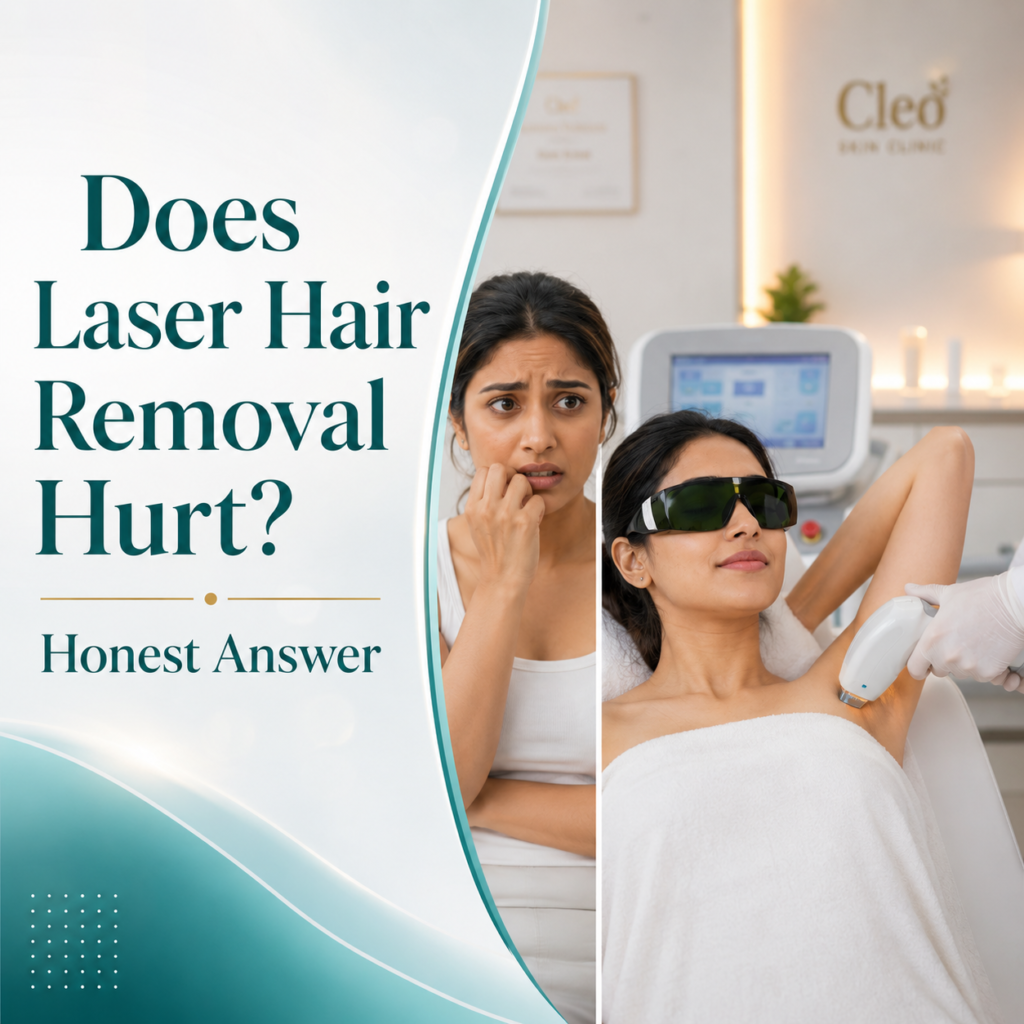
Picture this: a woman sits in the waiting chair, knee bouncing, bracing herself like she’s about to face something dreadful, all because a friend once told her it would be unbearable. Then the session ends in minutes, and she looks up, stunned, and asks, “That was it?” That scene plays out almost every week. So if you’re wondering, does laser hair removal hurt? Here’s the honest answer: it stings a little, like a warm rubber band flicking your skin, but it’s nowhere near the agony you imagine. Cooling tips keep the laser hair removal pain level mild. Quick, gentle, and far easier than the fear that precedes it. What Is Laser Hair Removal, Really? Laser hair removal uses a focused beam of light to target the pigment inside your hair follicle. The light is absorbed, turns into heat, and that heat disables the follicle so it stops growing hair. Dermatologists call this controlled process selective photothermolysis. The idea is simple: heat the root, spare the skin. Why unwanted hair grows in the first place: Types of lasers you’ll come across: Who gets it done: Almost everyone today students tired of shaving, brides-to-be, men treating their backs and chests, and busy parents wanting low-maintenance skin. So, Does Laser Hair Removal Hurt During the Session? Let’s address the main concern directly: does laser hair removal hurt enough to dread it? For most people, no. The honest sensation is a brief, warm snap that passes quickly. People often ask what does laser feel like, and the closest comparison is a hot pinprick or a small elastic flick against the skin. The cooling system built into the device reduces the discomfort considerably. That is why the laser hair removal pain level stays between “barely there” and “mildly ticklish” for most areas of the body. Some zones feel more than others. The upper lip, bikini line, and underarms sit over thinner skin with dense follicles, so they are more sensitive. Legs, arms, and the back feel very little. Also, by the third or fourth session there is less hair to treat, so each visit feels gentler. Laser vs Waxing Pain: The Comparison You Actually Want The laser vs waxing pain comparison has a clear winner for most people. Waxing involves a hot strip applied and ripped off, repeated across the whole area, every single time. Lasers are different — the discomfort is milder, briefer, and reduces for good as sessions add up. Factor Laser Hair Removal Waxing Sensation Brief warm snap, eased by cooling Sharp, repeated tug Duration of discomfort A split second per pulse Lingers across each pull Long-term feeling Eases session after session Same sting every appointment Permanence Long-lasting reduction Hair returns in weeks Ingrown hairs Rare Common Overall verdict Gentler & lasting Painful & repetitive When you compare laser vs waxing pain side by side, the trade-off is clear. Waxing gives sharp, recurring pain with no permanence. Laser gives a brief warmth that shrinks toward nothing. What About a Diode Laser Pain Experience Specifically? Since the diode is the go-to choice for Indian skin, here is what to expect from the diode laser pain experience. The diode penetrates deeper but, paired with contact cooling, stays comfortable. Most patients describe the diode laser pain experience as warm and snappy rather than sharp or burning closer to a heating pad tapping the skin. Thicker, darker hair absorbs the light well, so treatment is fast. The phrase you often hear, painless laser hair removal India clinics advertise refers to this combination of diode technology plus cooling. No treatment is one hundred percent sensation-free, but the experience marketed as painless laser hair removal India patients now expect is genuinely close when a trained dermatologist sets the right parameters for your skin. Results & Recovery Timeline Laser is not a one-and-done treatment. It works as a gradual reduction. Aftercare tip: avoid sauna, hot yoga, and direct sun for a day or two, and use sunscreen. Safety & Who Should Steer Clear For most people the treatment is very safe, but here is the fine print. Possible side effects (usually mild and short-lived): Who should pause or avoid it: The key rule is a proper consultation with a qualified dermatologist before you begin, so settings are matched to your skin. Frequently Asked Questions 1. Does laser hair removal hurt more than threading? Not really. Threading tugs and waters the eyes; laser is a quick warm snap softened by cooling. Most people find laser calmer. 2. What does laser feel like on sensitive areas like the upper lip? A little more noticeable here, like tiny warm flicks, but it lasts only seconds. 3. Is painless laser hair removal in India a real thing or just marketing? It’s close to reality thanks to modern diode machines with cooling tech, though no procedure is entirely sensation-free. 4. How does the laser hair removal pain level change over sessions? It drops. Less hair each visit means less heat absorbed, so later sessions feel gentler. 5. Laser vs waxing pain — which is better long term? Laser wins for most. Waxing repeats the sting endlessly; laser fades the discomfort and the hair over time. 6. Can men get it done too? Yes. Chests, backs, and beard lines are popular, and the diode laser pain experience is just as manageable. 7. Will I need numbing cream? Usually not. For very sensitive zones a clinic may offer a topical numbing option, but many people skip it. About the Doctor This treatment is best trusted to expert hands, and Dr. Vani Veggalam is exactly that. Conclusion So, does laser hair removal hurt? A little but in the gentlest, most forgettable way. A warm flick, a quick cooling breath, and you’re done. Compared to the repeated tug of waxing, it feels far kinder, and the discomfort shrinks with every visit while the hair disappears for good. The honest verdict is that fear is bigger than the feeling. Ready to trade endless waxing appointments for smooth, fuss-free
Laser Hair Removal: How Many Sessions Do You Really Need?
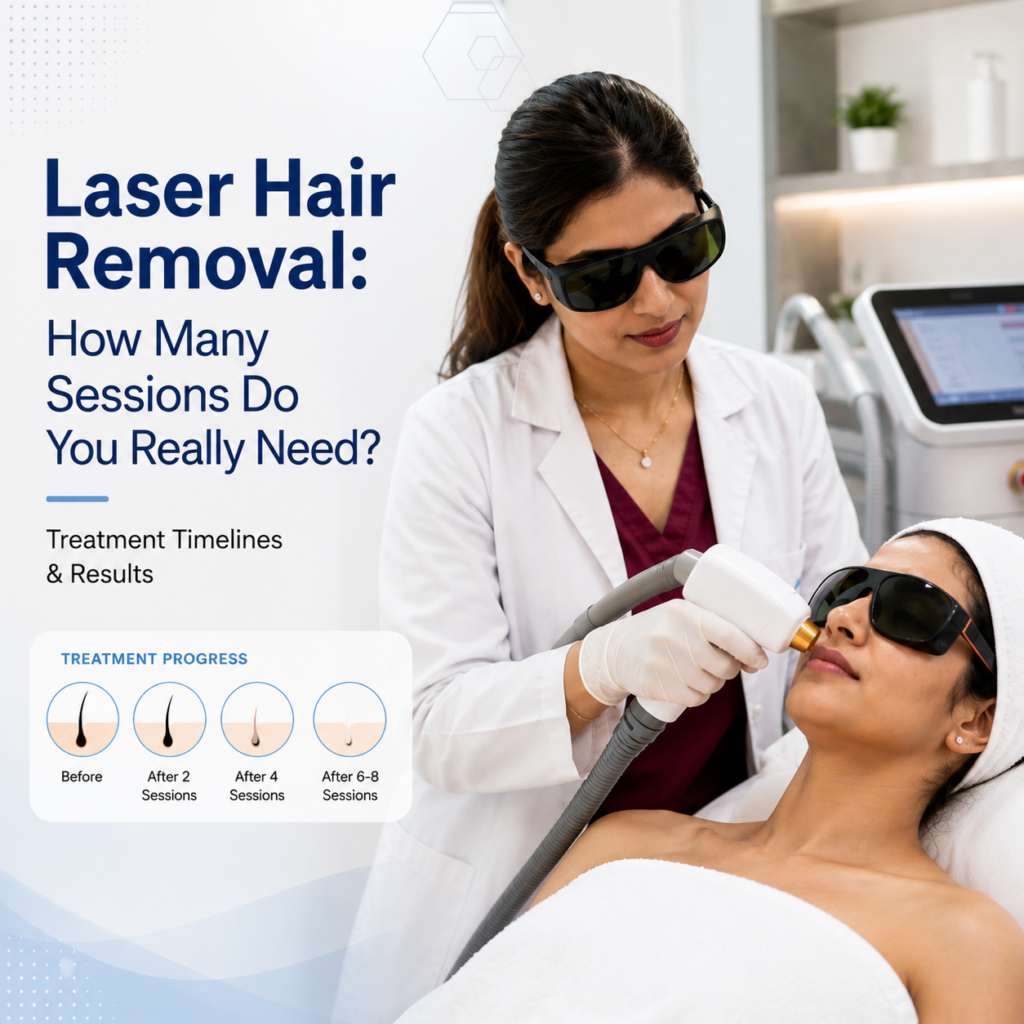
So you’re wondering how many sessions for laser hair removal you actually need before you can toss your razor for good? Here’s the honest scoop: most people need 6 to 8 sittings to see lasting, smooth results, spaced about 4 to 6 weeks apart. Coarser areas like underarms may clear faster, while finer facial fuzz can be stubborn. Because hair grows in phases, no single zap catches every strand. Stick with the plan, follow your dermatologist’s advice, and you’ll wave goodbye to constant shaving, waxing, and those annoying ingrown bumps. What Is Laser Hair Removal, Really? Let’s keep it simple. Laser hair removal is a treatment where a focused beam of light targets the pigment in your hair follicle. The follicle absorbs that light, heats up, and gets damaged enough to slow or stop new growth. Think of it like switching off a tiny bulb at the root. Why do we even grow unwanted hair in the first place? Blame a cocktail of genetics, hormones, and sometimes conditions like PCOS. Some folks just have thicker, darker body hair thanks to their family tree. Others notice sudden sprouting after hormonal shifts. There are a few flavors of this treatment: Who’s it for? Almost anyone tired of the endless shave-wax-repeat loop. Women battling chin hair, men wanting a clean chest, brides prepping for the big day, athletes who like silky skin. It’s wonderfully inclusive. Your Treatment Options: A Quick Comparison Laser isn’t the only player in town, but it’s arguably the most reliable for long-haul smoothness. Here’s how the contenders stack up: Treatment What It Does Longevity Discomfort Best For Laser Disables hair follicles with light Very long-lasting Mild snap-like feeling Smooth, reduced regrowth Chemical Peels Exfoliates skin, refines texture Temporary Mild tingling Pigmentation, not hair Topical Treatments Creams that slow growth Short-lived Minimal Light, sparse hair Combination Therapy Laser + peels or topicals together Excellent Varies Stubborn cases, dual concerns Here’s the thing about combination therapy: sometimes your dermatologist pairs laser with peels to tackle both hair and dark patches left behind by years of waxing. It’s a smart, holistic move. Chemical peels and topical creams alone won’t give you that near-permanent freedom, but they’re handy sidekicks. Results & Recovery: What the Timeline Actually Looks Like Alright, this is the part everyone scrolls down for. Let’s talk how many sessions for laser hair removal truly means in real life. Your hair doesn’t all grow at once. It follows the laser hair growth cycle — three phases called anagen (growing), catagen (resting), and telogen (shedding). Lasers only zap follicles in that active growing phase. Since only a chunk of your hair is “active” at any moment, you need repeated sittings to catch each strand at the right time. That’s the whole reason single zaps don’t cut it. So how does the count play out by area? When people ask about full body laser sessions, I always remind them patience pays off. Doing full body laser sessions in one go is doable, but your skin needs those gentle gaps between appointments to recover and shed treated hairs. Wondering how long laser hair removal takes per visit? A small zone like the upper lip wraps up in ten minutes flat. Curious how long laser hair removal takes for the entire body? Budget around 60 to 90 minutes. The full journey, start to finish, usually spans six to ten months because of those mandatory rest weeks. Downtime is refreshingly minimal. Maybe slight redness or a warm flush, like a mild sunburn, that fades within hours. You can return to work the same day. Just dodge direct sun and hot showers for a bit. Expected improvement? After two or three sittings, you’ll notice patchier, finer, slower regrowth. That first morning you skip shaving and your skin still feels baby-soft? Pure joy. Why So Many Sittings? The Permanent Question People crave permanent hair removal sessions that solve everything overnight. I get it. But here’s the gentle truth: “permanent” in dermatology means permanent reduction, not zero hairs forever. The follicles you treat properly won’t bounce back, yet hormones can occasionally wake dormant ones. That’s why a planned course of permanent hair removal sessions beats random one-off zaps. Consistency is your best friend. Skip months between visits and you let the laser hair growth cycle reset, which dilutes your progress. In India, dermatologists tailor settings for our melanin-rich skin tones, which is why quality matters so much. Reputable laser hair removal sessions India clinics use FDA-cleared machines suited to brown skin, reducing risk and boosting results. Choosing experienced laser hair removal sessions India providers also means fewer burns, less pigmentation, and a far comfier ride. Safety & Who Should Press Pause Laser is remarkably safe in trained hands, but let’s be candid about the fine print. Possible side effects include: Who should hold off or consult first? A good practitioner always screens you beforehand. Never feel shy asking questions; a clinic worth its salt welcomes them. Frequently Asked Questions Q1: How many sessions for laser hair removal will I personally need? Most people need 6 to 8, but your hair color, thickness, and hormones decide the final count. A consultation pins it down precisely. Q2: Is laser hair removal painful? Honestly? It’s tolerable. Most describe a warm snap. Modern machines have cooling tips that make it surprisingly comfy. Q3: How long does laser hair removal take to show results? You’ll spot thinner, slower regrowth after just two or three sittings. Full smoothness arrives over several months. Q4: Are results truly permanent? You get a long-lasting reduction. Occasional touch-ups once or twice a year keep things flawless. Q5: Can I do full body laser sessions safely? Absolutely. Many clients pick full coverage. Just space appointments as advised for the best outcome. Q6: Is it suitable for dark Indian skin? Yes, when the right laser (like Nd:YAG) is used. This is why picking a skilled clinic genuinely matters. Q7: How much is the gap between sittings? Usually 4 to 6
Is Laser Treatment Safe for Indian Skin? A Dermatologist’s Honest Guide (2026)
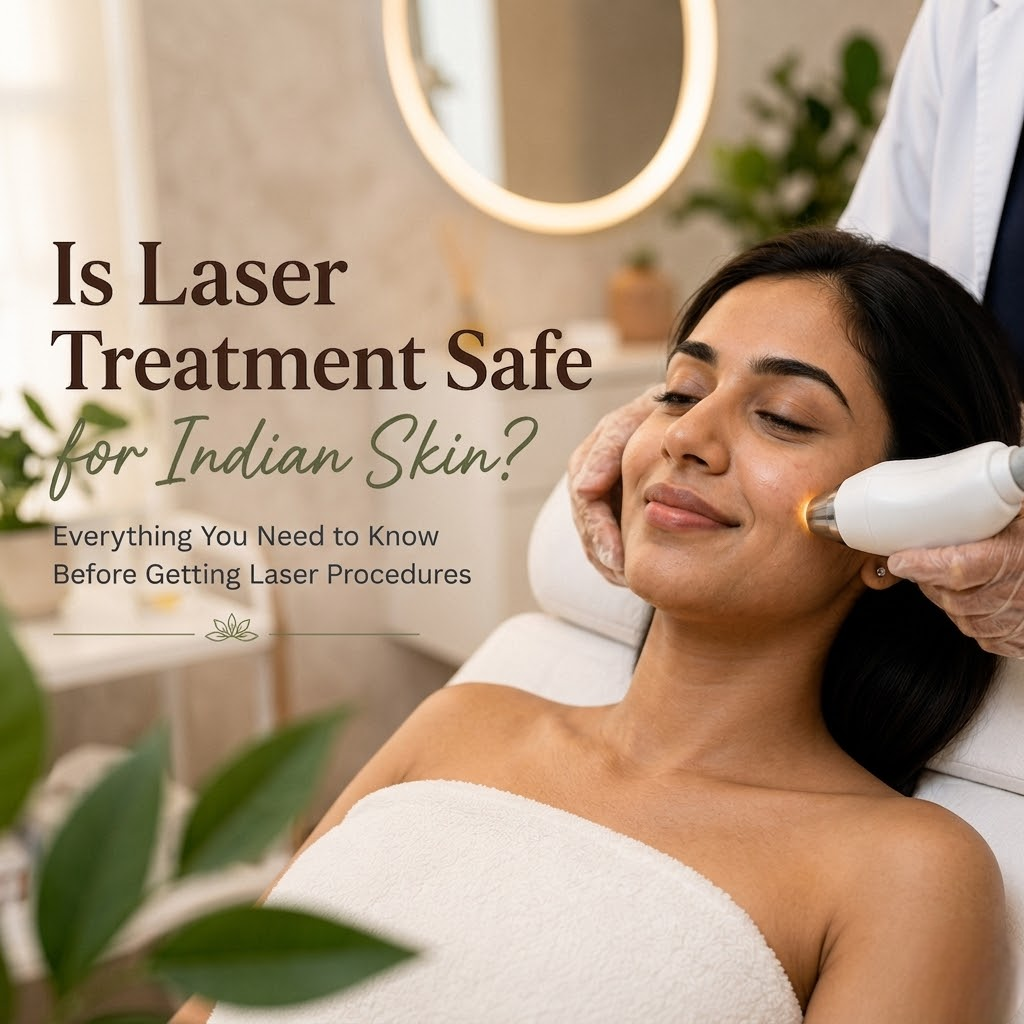
Yes, laser treatment is safe for Indian skin when performed by a trained dermatologist using the right device and settings. Indian skin tones fall into the higher Fitzpatrick categories, which carry more melanin and need gentler, melanin-friendly lasers like the Nd:YAG. With proper assessment, conservative energy levels, and post-care, results are excellent and complications are rare. The trick lies in customization, not avoidance. So if you’ve been hesitant because of horror stories online, know this: the technology has matured beautifully, and skilled hands make all the difference. Why Indian Skin Deserves a Different Conversation Picture this. Your cousin in the US raves about her laser session, but your neighbour swears it left a dark patch on her chin. Confusing, right? Here’s the thing nobody tells you at the dinner table: Indian skin behaves differently under a laser beam than fairer European skin does. Our skin is melanin-rich. That gorgeous brown glow comes from extra pigment, and pigment loves to react. When a laser isn’t calibrated thoughtfully, that same melanin can absorb too much heat and respond with darkening instead of clearing. This is precisely why the question Is laser treatment safe for Indian skin keeps popping up in clinic waiting rooms across the country. The good news? Modern dermatology figured this out years ago. What Are Pigmentation and Skin Concerns We Treat With Lasers? Pigmentation simply means uneven colour on your skin. Some spots go darker than the rest, creating patches, freckles, or dull stretches. Lasers are also used for unwanted hair, scars, and signs of aging. Causes A few usual suspects show up again and again: Types Common concerns include melasma, tan, freckles, dark underarms, and post-inflammatory hyperpigmentation. Each behaves uniquely, which is why a blanket approach never works. Who Is Affected Honestly? Almost everyone at some point. Women navigating hormonal flux, men dealing with stubborn tan, teenagers fighting acne scars. Indian skin, being so melanin-abundant, is especially prone to pigment troubles. Treatment Options: What Actually Works H2 Lasers aren’t your only ally. Let’s compare the main contenders so you can see where each fits. Treatment Best For Downtime Sessions Suitability for Deep Skin Tones Laser Pigmentation, hair, scars Minimal 4–8 Excellent with Nd:YAG Chemical Peels Tan, mild pigmentation 2–5 days 3–6 Good with mild acids Topical Treatments Early or surface pigment None Ongoing Safe but slow Combination Therapy Stubborn cases Varies Customized Most effective overall Laser The star of the show. For melanin-heavy complexions, the long-pulsed Nd:YAG is a quiet hero because it bypasses surface pigment and targets the problem deeper down. This is the cornerstone of laser for dark skin safety. Chemical Peels Think of these as a controlled exfoliation. They lift dull, tanned layers gently and pair wonderfully with lasers. Topical Treatments Creams and serums work slowly but steadily. They’re brilliant maintenance partners, though rarely a standalone fix for deep pigment. Combination Therapy The real magic happens when treatments collaborate. A laser session, a peel, plus a tailored cream routine often outperforms any single method. Understanding Your Fitzpatrick Skin Type Here’s a concept worth knowing. The Fitzpatrick skin type laser classification sorts skin into six categories based on how it reacts to sun. Most Indians sit between Type IV and Type VI, meaning we tan readily and burn rarely. Why does this matter so much? Because a laser setting perfect for Type II Scandinavian skin could be reckless on Type V Indian skin. A seasoned dermatologist reads your Fitzpatrick category like a roadmap, then dials in wavelength, fluence, and pulse duration accordingly. This single step is the bedrock of pigmentation laser safety India standards. Results and Recovery: What to Realistically Expect Patience, dear reader, is your finest companion here. Sessions Needed Most pigmentation concerns need four to eight sessions, spaced three to four weeks apart. Hair reduction often takes six to ten. Your skin renews on its own clock, and rushing only invites trouble. Downtime One of laser’s loveliest perks is its minimal disruption. You might notice slight redness or a warm, sunburnt sensation for a day or two. Most people stroll right back to work the same afternoon. Expected Improvement Gradual but genuine. Pigment fades layer by layer, tone evens out, and that elusive radiance returns. Think of it as a slow sunrise rather than a flicked switch. Safety and Who Should Step Back Now for the candid part. Knowing the laser treatment side effects India patients occasionally face helps you make a clear-eyed decision. Side Effects Temporary and usually mild: Serious complications are uncommon when a qualified hand holds the device. Following proper dermatologist laser advice before and after each session shrinks risk dramatically. Contraindications Some folks should wait or avoid lasers altogether: When patients ask me directly whether laser treatment is safe for Indian skin, my honest reply is: yes, for the right candidate, with the right device, in the right hands. That third part is non-negotiable. And understanding the genuine laser treatment side effects India clinics report only reinforces how essential expertise truly is. Frequently Asked Questions 1. Will laser darken my skin instead of lightening it? Not when settings suit your tone. Improper energy on melanin-rich skin can cause temporary darkening, which is exactly why specialist calibration matters. 2. How do I know if a clinic is suitable for deep skin tones? Ask about their devices. A clinic offering Nd:YAG lasers and discussing your Fitzpatrick type demonstrates real awareness of laser for dark skin safety. 3. Is the procedure painful? Most describe it as tiny rubber-band snaps. Numbing cream makes it quite tolerable. 4. Can I do laser during summer? Possible, but trickier. Fresh tan heightens reactivity, so winter and monsoon months are gentler windows. 5. How long until I see results? Subtle changes appear within two or three sessions, with fuller improvement across the full course. 6. Is it permanent? Hair reduction is long-lasting. Pigmentation may need occasional touch-ups, since lifestyle and sun keep influencing your skin. 7. Is laser safe for sensitive areas? Yes, when handled by an