Home Remedies vs Clinical Treatments for Pigmentation in Hyderabad – What Actually Works?

If you’re stuck wondering about home remedies vs clinical treatments for pigmentation, here’s the honest truth in one bite. Home kitchen fixes like turmeric, lemon, and aloe vera can lightly brighten very mild dullness, but they rarely erase stubborn dark patches like melasma, sun spots, or post-acne marks. Clinical pigmentation treatment results from lasers, chemical peels, and dermatologist-prescribed creams are far more reliable, faster, and longer-lasting. The smartest path? Start with a skin consultation, treat the root cause, and pair professional care with gentle daily habits at home. That combination is what works for dark spots in real life. What Is Pigmentation, Really? Picture this. You wake up, peek into the mirror, and notice those uneven brown patches around your cheeks that weren’t there last summer. Frustrating, right? Pigmentation is basically your skin producing extra melanin in certain spots. Melanin is the natural pigment that gives your skin its colour. When it gets triggered or goes a bit overboard, you see dark patches, freckles, or uneven tone. Common Causes Types of Pigmentation Who Gets Affected? Honestly? Almost everyone at some point. But Indian and South Asian skin tones are more prone because we have more active melanocytes. Women between 20 and 50, people who work outdoors, new mothers, and anyone with acne-prone skin face it more often. Treatment Options – Kitchen Shelf vs Clinic Chair Let’s get to the juicy part. When your friend swears by lemon-honey masks and your cousin swears by lasers, who’s right? Home Remedies – The Comforting Classics These are the gentle, slow-burn options your grandmother probably recommended. The best treatment for pigmentation at home isn’t lemon juice (please don’t, it burns your skin barrier). It’s consistent sunscreen, a gentle vitamin C serum every morning, and niacinamide at night. That’s it. Boring but effective. Clinical Treatments – The Real Game Changers This is where dermatologists step in with tools backed by years of research. 1. Laser Therapy Devices like Q-switched Nd:YAG break down melanin clusters deep in the skin. Great for stubborn melasma, sun spots, and dark circles. 2. Chemical Peels Glycolic, lactic, mandelic, or kojic acid peels exfoliate the top layer and push fresh, even-toned skin to the surface. 3. Topical Prescriptions Hydroquinone, tretinoin, azelaic acid, and tranexamic acid creams – prescribed in measured combinations. These are not the same as drugstore creams. 4. Combination Therapy Often the magic happens when your dermatologist mixes a low-strength peel, a tailored cream, and home sunscreen into one personalised plan. Comparison Table Factor Home Remedies Clinical Treatments Speed of results 3–6 months (mild) 4–8 weeks (visible) Effectiveness on deep pigmentation Low High Customisation Generic Personalised by skin type Safety on Indian skin Often irritating Doctor-monitored Cost Low Moderate to high Long-term results Temporary Long-lasting with maintenance In the chemical peel vs home remedies debate, peels win for stubborn patches because they work on actual cellular turnover, not just surface tone. Same logic applies to natural vs laser pigmentation treatment – nature soothes, lasers correct. Results & Recovery Timeline – What to Actually Expect Let’s be real. Nobody wakes up flawless after one session. Here’s the honest breakdown. Sessions Needed Downtime Expected Improvement Most patients see 60–80% lightning with a proper clinical plan. Maintenance sessions every few months keep the glow alive. With only home masks, you might see 10–20% improvement on mild marks – and that’s being generous. Safety & Who Should Skip Certain Treatments Skin is personal. What works wonders for your colleague may flare up your cheeks. So caution matters. Possible Side Effects Who Should Be Extra Careful A good dermatologist will always screen for these before suggesting anything. That’s the whole point of professional care. Frequently Asked Questions 1. Can home remedies fully cure melasma? Sadly, no. Melasma is a deep, hormone-linked condition. Home remedies can soothe, but they cannot reach the dermal layer where the pigment sits. Clinical treatments paired with strict sun protection give the best outcome. 2. Is laser treatment safe for Indian skin? Yes, when done by an experienced dermatologist using the right wavelength like Q-switched Nd:YAG. The key is correct settings for melanin-rich skin. 3. How long do clinical pigmentation treatment results last? With proper maintenance and daily sunscreen, results can last 1 to 3 years. Without sun protection, pigmentation can creep back faster than you’d expect. 4. Are chemical peels painful? Most patients describe a mild tingling or warm sensation for a few minutes. Stronger peels may feel slightly more intense but are tolerable and supervised. 5. Why do dark spots keep coming back? Usually because of unprotected sun exposure, hormonal triggers, or stopping treatment too early. Pigmentation needs consistent care, not short bursts. 6. Can I combine home remedies with clinical treatments? Yes, but only the right ones. Sunscreen, vitamin C, and niacinamide pair beautifully with clinical care. Skip lemon, baking soda, and aggressive scrubs. 7. What’s truly the best treatment for pigmentation at home as a daily routine? Broad-spectrum SPF 50 every morning, vitamin C serum, gentle cleansing, and niacinamide at night. That’s the holy quartet. About the Doctor Dr. Vani Veggalam is a State Topper with a Diploma in Anesthesiology (DA) and an MD in Dermatology, Venereology, and Leprosy (MD–DVL), graduating with distinctions from NTR University of Health Sciences in 2001. She is a highly accomplished Consultant Dermatologist and Laser Surgeon, and the Founder and Managing Director of Cleo Skin Clinic, Kukatpally, Hyderabad, serving patients since 2016. She is a member of IADVL, the Association of Cutaneous Surgeons of India, Cosmetic Dermatology Society India, a Fellow of the American Academy of Aesthetic Medicine, and an International Fellow of the American Academy of Dermatology (IFAAD). Her honours include the HI9 Best Doctor Award in Dermatology and Cosmetology (2017), Women Empowerment Award (2018), Best Dermatologist Award from Hi9 (2022), and the HMTV Healthcare Award (2023). Her expertise spans pigmentation correction, advanced laser surgery, anti-ageing care, and aesthetic dermatology. Learn more here: About Dr. Vani Conclusion So, here’s the verdict on home remedies vs clinical treatments for pigmentation –
Why Pigmentation Comes Back After Treatment?
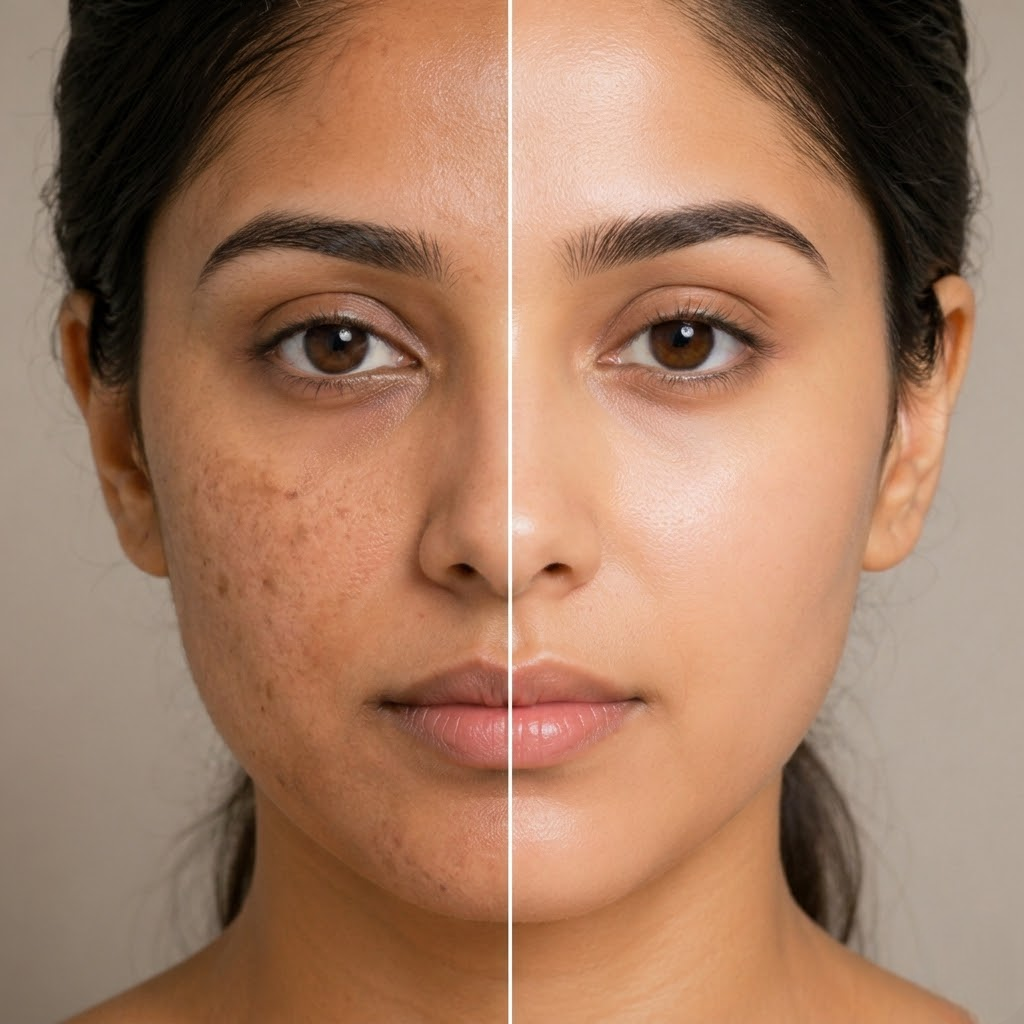
Pigmentation often returns after treatment because the underlying triggers, sun exposure, hormonal changes, inflammation, and genetics, remain active even after the visible spots fade. Lasers and peels remove existing pigment, but they cannot stop your skin from producing new melanin if the cause is not addressed. Why pigmentation comes back after treatment comes down to three things: incomplete diagnosis, poor sun protection, and missing follow-up care. With the right treatment plan, daily SPF, and lifestyle adjustments, long-term clearance is realistic for most patients. What Is Pigmentation? Pigmentation refers to the colour of your skin, which is produced by cells called melanocytes. These cells release melanin, the pigment that gives skin its tone. When melanocytes become overactive in certain areas, dark patches appear. Common Causes The main triggers include sun exposure, hormonal changes during pregnancy or while taking contraceptive pills, skin inflammation from acne or injuries, certain medications, and a family history of pigmentation. Types of Pigmentation Who Is Most Affected? Indian and South Asian skin types are more prone to pigmentation because of higher baseline melanin levels. Women aged 20 to 50 are most commonly affected, especially during hormonal shifts. People who spend long hours outdoors, skip sunscreen, or have a family history are also at higher risk. The Real Reasons Pigmentation Returns Most patients assume that once the spots fade, the problem is solved. That is rarely the case. Pigmentation returning after laser treatment usually happens because the laser removes the pigment but does not switch off the melanocytes that produced it. If those cells are stimulated again, the pigment comes back, sometimes in the same spot, sometimes nearby. The main reasons why dark spots come back include: Among the most common hyperpigmentation recurring causes is something dermatologists call melanocyte memory. Once these cells have been triggered, they tend to react more quickly the next time they are exposed to UV rays or inflammation. Melasma coming back after treatment is particularly common because it is driven by hormones and heat, both of which are difficult to fully avoid. This is why melasma is considered a long-term condition that needs management rather than a one-time cure. Treatment Options That Truly Work The right treatment depends on the type, depth, and cause of pigmentation. A proper skin assessment is essential before starting any procedure. Comparison Table Treatment Best For Sessions Needed Downtime Approximate Cost Q-Switched Laser Sunspots, deep pigmentation 4–8 1–2 days ₹4,000–₹8,000 per session Chemical Peels Mild pigmentation, PIH 4–6 3–5 days ₹2,500–₹5,000 per session Topical Creams Early-stage spots, melasma Daily for 8–12 weeks None ₹500–₹2,500 per tube Combination Therapy Stubborn or recurring cases 6–10 visits Mild ₹15,000–₹40,000 plan Laser Therapy Lasers target melanin and break it into smaller particles, which are then cleared by the body. They work well for stubborn pigmentation but require careful settings for Indian skin. Chemical Peels Peels use acids such as glycolic, lactic, or mandelic to exfoliate the upper layers of skin. Over several sessions, they help fade pigmentation and improve overall skin texture. Topical Treatments Prescription creams containing tranexamic acid, kojic acid, azelaic acid, niacinamide, or hydroquinone slow down melanin production. They are slow-acting but effective when used consistently. Combination Therapy For stubborn or recurring cases, combining oral medication, topical creams, peels, and lasers gives the best long-term results. This layered approach addresses the problem from multiple angles. Results and Recovery Timeline Improvement is gradual, not instant. Most patients see noticeable changes within a few months. How to Prevent Pigmentation From Returning Prevention is just as important as treatment. Knowing how to prevent pigmentation again can save you years of frustration. Safety and Who Should Avoid Treatment Most pigmentation treatments are safe when performed by qualified professionals, but some precautions apply. Possible Side Effects Who Should Avoid Certain Treatments Frequently Asked Questions 1. How soon does pigmentation return after laser treatment? It depends on aftercare. With strict sun protection, results can last for years. Without it, pigmentation may return within 3 to 6 months. 2. Can melasma be cured permanently? Melasma is a chronic condition. It can be controlled very well, but it usually requires long-term management rather than a permanent cure. 3. Does sunscreen really make a difference? Yes. Sunscreen is the single most important step. Even indoor light and screens can stimulate pigmentation in sensitive skin. 4. Are home remedies effective? They may help mildly, but they cannot match the results of medical treatments performed under expert supervision. 5. Why does my pigmentation return faster than others? Genetics, hormones, lifestyle, and skin type all influence how quickly pigmentation comes back. 6. Can men get pigmentation too? Yes. Men experience sunspots, melasma, and post-inflammatory pigmentation as well, though they often seek treatment later. 7. Is laser treatment safe for Indian skin? When performed by an experienced dermatologist with the correct wavelength and settings, laser treatment is safe and effective for Indian skin. About the Doctor Dr. Vani Veggalam is the founder of Cleo Skin Clinic in Hyderabad and a respected dermatologist with over 15 years of clinical experience. She specialises in pigmentation, melasma, acne scars, hair restoration, and advanced aesthetic dermatology. Her practice combines evidence-based medicine with individualised care, and she is known for delivering visible, long-lasting results. Learn more here: About Dr. Vani Conclusion Pigmentation is not a one-time problem. It is an ongoing relationship between your skin, your environment, and your habits. Understanding why pigmentation comes back after treatment is the first step toward lasting clarity. With the right expert, a proper treatment plan, and consistent sun protection, clear skin is achievable and maintainable. If you are tired of watching dark spots return, book a consultation with Dr. Vani at Cleo Skin Clinic and start a treatment plan built for your skin. Related Reads Book Your Consultation Now
Best Treatment for Melasma: Does Laser Really Work?
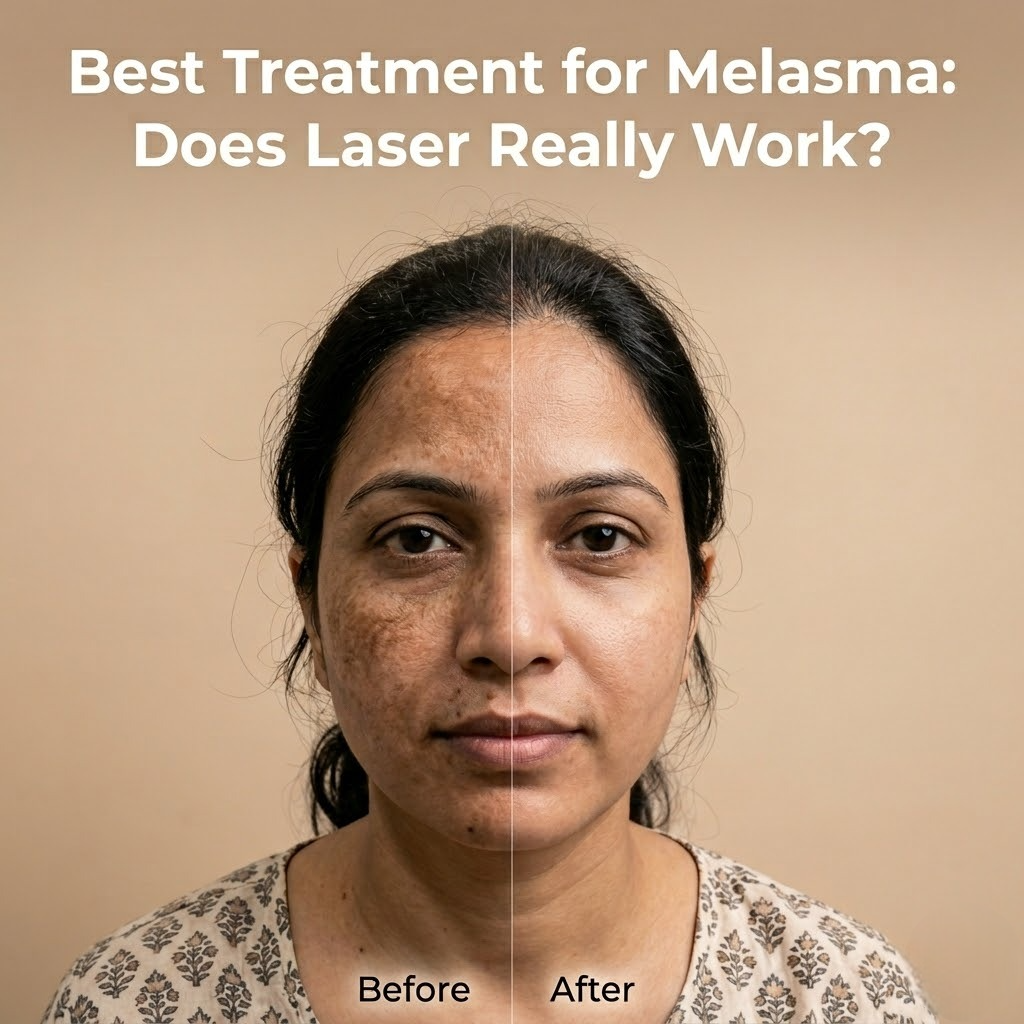
Those persistent brown patches on your face that no cream or home remedy seems to fix, that’s melasma, and it’s one of the most frustrating skin conditions to treat. The best treatment for melasma isn’t one magic procedure. It’s a phased combination of prescription topicals, chemical peels for melasma, and carefully timed laser treatment for melasma tailored specifically to your skin type. This guide breaks down what actually works for melasma on face treatment, why laser alone can backfire on Indian skin, what melasma laser treatment results you can realistically expect, and how a structured hormonal pigmentation treatment plan can help you achieve clear, even-toned skin that actually lasts. What Exactly Is Melasma? Melasma is a chronic, acquired hypermelanotic disorder where your skin produces excess melanin in specific areas, creating symmetrical patches of brown or greyish-brown discolouration, most commonly across the face. But it isn’t just pigment sitting on the surface. It involves hyperactive melanocytes, compromised basement membranes, increased dermal vascularity, and mast cell proliferation. Think of it less as a stain and more as a deeply embedded pattern your skin has learned to repeat. The primary triggers include hormonal upheaval (pregnancy, oral contraceptive pills, PCOS), ultraviolet and visible light exposure, genetic predisposition, thyroid dysfunction, and an increasingly recognised vascular component where increased blood vessel density beneath patches actively fuels pigment production. This is precisely why hormonal pigmentation treatment must address these underlying drivers, not just the surface discolouration. Not all melasma behaves the same way either. A Wood’s lamp examination can classify it as epidermal (responds well), dermal (more stubborn), or mixed (moderate response). Most patients seeking melasma treatment for Indian skin present with mixed-type melasma, which is exactly why a one-size-fits-all approach fails spectacularly. The condition disproportionately affects Fitzpatrick skin types III–V, placing Indian, Southeast Asian, and Middle Eastern populations squarely in the high-risk zone — with women aged 20–50 bearing the heaviest burden. Best Treatment Options: The Pyramid Approach Most people walk into a clinic expecting a single laser session to erase everything. It’s what Instagram reels promise. And it’s exactly why so many people end up disappointed. Effective melasma treatment works like a pyramid — you build from the base, and the laser only enters the picture once your skin is properly stabilised. Layer 1: Topical Depigmenting Agents Every plan starts here. The gold-standard modified Kligman’s formula combines hydroquinone (2–4%), tretinoin, and a mild corticosteroid to suppress melanin, accelerate turnover, and calm inflammation simultaneously. Modern formulations also include: For melasma treatment for Indian skin, hydroquinone is cycled on and off to prevent exogenous ochronosis. And the single most important product? Sunscreen — SPF 50+, broad-spectrum, with iron oxide, reapplied every three hours. No treatment in the world can outwork unprotected sun exposure. Layer 2: Chemical Peels for Melasma After 6–8 weeks of topicals, your dermatologist introduces chemical peels for melasma — glycolic acid, mandelic acid, modified Jessner’s, or lactic acid depending on your skin tone and sensitivity. These accelerate epidermal exfoliation and enhance topical penetration through a synergistic amplification effect. Expect 4–8 sessions, spaced 2–3 weeks apart, with mild flaking for 1–2 days. Layer 3: Oral Tranexamic Acid The game changer. At 250 mg twice daily, oral tranexamic acid inhibits UV-induced melanocyte stimulation and reduces the abnormal vascular proliferation beneath melasma patches. Clinical trials from South Korea and India show significant improvement within 8–12 weeks. For patients wondering how to remove melasma permanently, this combined with topicals currently offers the closest thing to sustained remission. Not suitable for patients with clotting disorders or thromboembolic history. Layer 4: Laser Treatment for Melasma So — does laser work for melasma? Yes, with conditions. Low-fluence Q-switched Nd:YAG laser gently fragments deep melanin without triggering thermal injury. It delivers outstanding melasma laser treatment results when introduced after 3–6 months of topicals and peels, at conservative settings (1.5–2.5 J/cm²), spaced 2–4 weeks apart. It provides that final 20–30% improvement for stubborn dermal pigment. But when used prematurely, aggressively, or without sun protection — it can cause rebound darkening worse than the original melasma. Newer technologies like PicoSure and fractional thulium lasers show promise but need more long-term data for Indian skin. Layer 5: Microneedling with Drug Delivery Medical-grade microneedling at 1.0–1.5 mm depth creates micro-channels that boost transdermal absorption of tranexamic acid serum, vitamin C, or glutathione. It simultaneously stimulates collagen remodelling. Expect 4–6 sessions with mild flushing for 24–48 hours and excellent safety for Indian skin. Dermatologist’s Clinical Recommendation The most reliable outcomes at Cleo Skin Clinic follow a disciplined, phased protocol. Phase 1 (Weeks 1–8): customised topicals, SPF 50+ sunscreen, and oral tranexamic acid where appropriate. Phase 2 (Weeks 8–16): chemical peels every 2–3 weeks with clinical photography assessment — most patients reach 40–50% improvement here. Phase 3 (Week 16+): low-fluence laser and microneedling for resistant pigment. Phase 4 (Ongoing): lifetime sunscreen, cyclical topicals, maintenance peels every 2–3 months, and biannual follow-ups. Melasma is not a sprint — it’s a strategic marathon with an absolutely reachable finish line. Results & Recovery Timeline Treatment Visible Results Begin Sessions Needed Downtime Topicals + Sunscreen 4–6 weeks Ongoing None Chemical Peels After 2–3 sessions 4–8 sessions Mild flaking, 1–2 days Oral Tranexamic Acid 8–12 weeks 3–6 months None Laser Toning After 4–6 sessions 6–10 sessions Transient redness, few hours Microneedling After 2–3 sessions 4–6 sessions Mild flushing, 24–48 hours With a committed combination approach, most patients achieve 60–80% improvement within 4–6 months. Epidermal melasma can clear almost completely, while mixed and dermal types reach 50–70% — a difference that is visually striking and emotionally significant. Safety & Who Should Proceed with Caution Avoid certain treatments if you are: pregnant or breastfeeding, have a history of DVT or clotting disorders, have active skin infections, are currently on isotretinoin, or are unwilling to commit to daily sunscreen. Frequently Asked Questions Can melasma be removed permanently? Melasma is chronic, but sustained remission is absolutely achievable with maintenance therapy — daily sunscreen, periodic topicals, and lifestyle modifications. How to remove melasma permanently is better understood