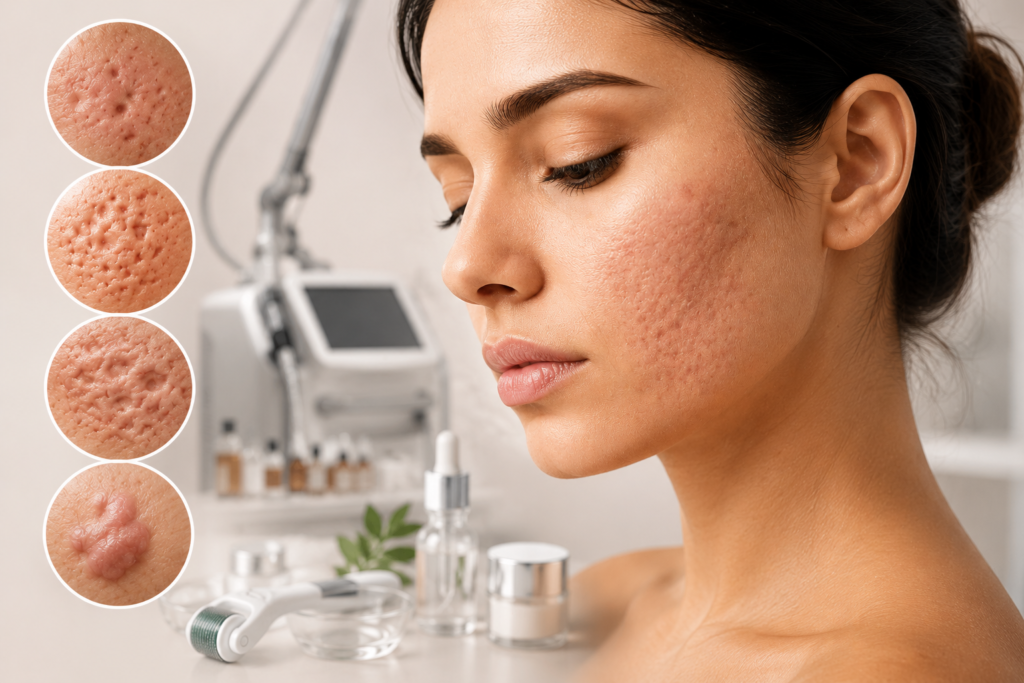
Types of acne scars generally fall into four categories: ice pick, boxcar, rolling, and hypertrophic or keloid scars, each requiring a distinct treatment approach for meaningful improvement. The best treatment for acne scars depends on scar depth, skin type, and the extent of collagen damage beneath the surface. Options range from chemical peels and microneedling to laser resurfacing and dermal fillers, often used in combination for optimal results. A dermatologist’s assessment is essential, as an acne scar removal treatment that works well for shallow scarring may be entirely ineffective for deeper, pitted scars.
What Are Acne Scars?
Acne scars are permanent changes in the skin’s texture that develop after inflamed breakouts damage the underlying tissue. Unlike temporary redness or dark spots, which typically fade on their own, true scarring involves a loss or excess of collagen, resulting in visible depressions or raised areas on the skin.
Causes
Scarring occurs when the skin’s healing process is disrupted during or after an inflammatory breakout. Common contributing factors include:
- Deep, inflamed cystic or nodular acne
- Picking, squeezing, or popping pimples
- Delayed or inadequate treatment of active acne
- Genetic predisposition to poor wound healing
- Prolonged inflammation that damages the dermal layer
Types
Understanding the different types of acne scars is the first step toward choosing the right treatment:
- Ice pick scars — narrow, deep pits that extend into the skin, resembling small puncture marks
- Boxcar scars — broad, box-like depressions with defined edges, often on the cheeks and temples
- Rolling scars — shallow, wave-like depressions caused by fibrous bands pulling the skin downward
- Hypertrophic and keloid scars — raised, thickened tissue that forms when the body produces excess collagen during healing
Who Is Affected
Acne scarring is not limited to those with severe acne alone; even moderate breakouts, if picked at or left untreated for long periods, can leave lasting marks. Adults revisiting old acne scars years later, as well as teenagers currently managing active breakouts, both commonly seek treatment.
Acne Scar Treatment Options Compared
Selecting the right acne scar treatment options depends heavily on the scar type identified during a dermatological assessment. The table below outlines commonly used approaches.
| Treatment | Best For | How It Works | Downtime |
| Chemical Peels | Superficial scarring, discoloration | Exfoliates outer skin layers to promote renewal | 1–3 days |
| Microneedling | Rolling and boxcar scars | Stimulates collagen production via controlled micro-injuries | 1–2 days |
| Laser Resurfacing | Ice pick, boxcar, and rolling scars | Removes damaged skin layers and boosts collagen remodeling | 3–7 days |
| Dermal Fillers | Rolling scars | Adds volume beneath depressions to smooth the surface | Minimal |
| Subcision | Rolling and tethered scars | Releases fibrous bands causing the depression | 2–4 days |
| Steroid Injections | Hypertrophic and keloid scars | Flattens raised tissue by reducing excess collagen | None |
Most dermatologists recommend combining two or more of these methods, since scars rarely belong to a single category and often respond better to a layered approach.
Results & Recovery Timeline
Sessions Needed
Depending on the severity and scar type, most patients require four to six sessions of laser or microneedling treatment, spaced three to four weeks apart, to see substantial improvement.
Downtime
Recovery varies by procedure. Chemical peels and microneedling generally involve one to three days of mild redness, while laser resurfacing may require slightly longer downtime, particularly for deeper resurfacing sessions.
Expected Improvement
Noticeable smoothing of the skin’s texture is typically visible after the second or third session, with continued improvement over several months as collagen remodeling progresses. Full results are usually assessed around the six-month mark, since collagen production continues well after the final session.
Safety & Who Should Avoid It
Side Effects
Common, generally mild side effects associated with acne scar treatments include:
- Temporary redness, swelling, or sensitivity
- Mild peeling or flaking following resurfacing procedures
- Increased sun sensitivity for a short period post-treatment
- Rare pigmentation changes, particularly if aftercare guidance is not followed
Contraindications
Certain treatments may need to be avoided or adjusted for individuals who:
- Are pregnant or breastfeeding
- Have active acne breakouts or skin infections at the treatment site
- Have a history of keloid formation (relevant for certain laser and needling procedures)
- Are taking isotretinoin or have recently completed a course of it
- Have uncontrolled diabetes or impaired wound healing
A thorough consultation helps determine which treatments are appropriate and safe for individual skin conditions.
Frequently Asked Questions
1. What are the main types of acne scars, and how are they different?
The main types of acne scars are ice pick, boxcar, rolling, and hypertrophic or keloid scars. They differ in shape, depth, and how they form, which is why each requires a tailored treatment approach.
2. What is considered the best treatment for acne scars?
There is no single universal answer, as the best treatment for acne scars depends on scar type and severity. Laser resurfacing and microneedling are widely regarded as effective for most textural scars, while filler injections work well for rolling scars.
3. How to treat acne scars that have been present for years?
Older scars can still respond well to treatment. Options for how to treat acne scars long after they’ve formed include microneedling, laser resurfacing, and subcision, often combined for more complete results.
4. Is acne scar removal treatment permanent?
Most treatments produce long-lasting improvement rather than complete removal, particularly for deeper scars. Combining procedures generally yields the most durable results.
5. How many sessions are typically needed for visible results?
Most patients notice meaningful improvement after four to six sessions, though this varies based on scar depth and the treatment method chosen.
6. Can acne scar treatment options be combined for better results?
Yes. Combining treatments, such as microneedling with subcision or laser resurfacing, often produces better outcomes than relying on a single method alone.
7. Does treating active acne first help before starting scar treatment?
Yes. Addressing active breakouts before beginning scar treatment reduces the risk of new scarring and allows the skin to heal more predictably during the procedure.
About the Doctor
Dr. Vani Veggalam — Founder & Managing Director, Cleo Skin Clinic, Hyderabad
- Qualifications: MD in Dermatology, Venereology & Leprosy (MD–DVL) and Diploma in Anesthesiology — a state topper who graduated with distinctions from NTR University of Health Sciences
- Experience: Practising dermatology for over two decades, and running Cleo Skin Clinic’s success stories since 2016
- Clinic Location: Flat No: 13, 2nd Floor, Rd No 1, Opposite GHMC Park, Kukatpally, Hyderabad
- Expertise: Consultant Dermatologist & Laser Surgeon; Fellow of the American Academy of Aesthetic Medicine; member of IADVL, the Association of Cutaneous Surgeons of India, and the Cosmetic Dermatology Society of India; recipient of the Hi9 Best Dermatologist Award (2022) and HMTV Healthcare Award (2023); speaker at international forums including Dubai Derma and Dermacon
Conclusion
Living with acne scars can feel discouraging, especially when the acne itself has long since cleared. Understanding the types of acne scars and treatments available makes it far easier to set realistic expectations and choose a plan that actually addresses the underlying skin damage. With an accurate diagnosis and a combination of appropriate procedures, visible, lasting improvement is achievable for most scar types.
Related pages: Chemical Peels | Laser Treatments | Medi Facials
Further reading: Cleo Skin Clinic Blog
📞 Ready to Say Goodbye to Acne Scars?
Stop guessing and start healing. Book a one-on-one consultation with Dr. Vani Veggalam at Cleo Skin Clinic, Kukatpally, and get a scar-treatment plan built just for you.
👉 Book Your Consultation Now | 📟 Call: +91 96669 20777 / +91 95500 05777
Open 9 AM – 10 PM, Monday to Saturday.