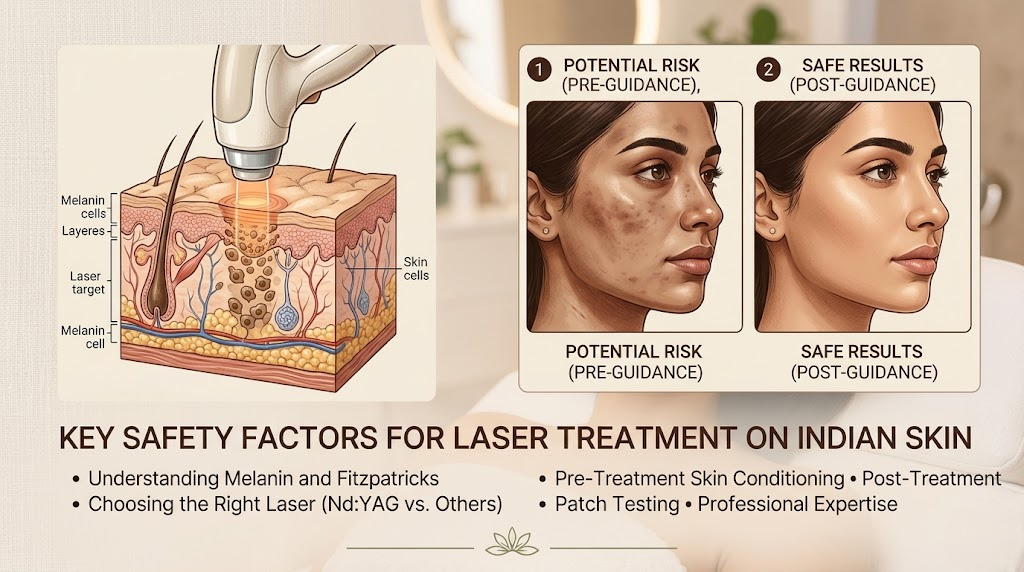
Yes, laser treatment is safe for Indian skin when performed by a trained dermatologist using the right device and settings. Indian skin tones fall into the higher Fitzpatrick categories, which carry more melanin and need gentler, melanin-friendly lasers like the Nd:YAG. With proper assessment, conservative energy levels, and post-care, results are excellent and complications are rare. The trick lies in customization, not avoidance. So if you’ve been hesitant because of horror stories online, know this: the technology has matured beautifully, and skilled hands make all the difference.
Why Indian Skin Deserves a Different Conversation
Picture this. Your cousin in the US raves about her laser session, but your neighbour swears it left a dark patch on her chin. Confusing, right? Here’s the thing nobody tells you at the dinner table: Indian skin behaves differently under a laser beam than fairer European skin does.
Our skin is melanin-rich. That gorgeous brown glow comes from extra pigment, and pigment loves to react. When a laser isn’t calibrated thoughtfully, that same melanin can absorb too much heat and respond with darkening instead of clearing. This is precisely why the question Is laser treatment safe for Indian skin keeps popping up in clinic waiting rooms across the country.
The good news? Modern dermatology figured this out years ago.
What Are Pigmentation and Skin Concerns We Treat With Lasers?
Pigmentation simply means uneven colour on your skin. Some spots go darker than the rest, creating patches, freckles, or dull stretches. Lasers are also used for unwanted hair, scars, and signs of aging.
Causes
A few usual suspects show up again and again:
- Sun exposure that triggers excess melanin
- Hormonal shifts during pregnancy or with certain medications
- Post-acne marks that linger long after the pimple leaves
- Genetics, because some of us are simply predisposed
Types
Common concerns include melasma, tan, freckles, dark underarms, and post-inflammatory hyperpigmentation. Each behaves uniquely, which is why a blanket approach never works.
Who Is Affected
Honestly? Almost everyone at some point. Women navigating hormonal flux, men dealing with stubborn tan, teenagers fighting acne scars. Indian skin, being so melanin-abundant, is especially prone to pigment troubles.
Treatment Options: What Actually Works H2
Lasers aren’t your only ally. Let’s compare the main contenders so you can see where each fits.
| Treatment | Best For | Downtime | Sessions | Suitability for Deep Skin Tones |
| Laser | Pigmentation, hair, scars | Minimal | 4–8 | Excellent with Nd:YAG |
| Chemical Peels | Tan, mild pigmentation | 2–5 days | 3–6 | Good with mild acids |
| Topical Treatments | Early or surface pigment | None | Ongoing | Safe but slow |
| Combination Therapy | Stubborn cases | Varies | Customized | Most effective overall |
Laser
The star of the show. For melanin-heavy complexions, the long-pulsed Nd:YAG is a quiet hero because it bypasses surface pigment and targets the problem deeper down. This is the cornerstone of laser for dark skin safety.
Chemical Peels
Think of these as a controlled exfoliation. They lift dull, tanned layers gently and pair wonderfully with lasers.
Topical Treatments
Creams and serums work slowly but steadily. They’re brilliant maintenance partners, though rarely a standalone fix for deep pigment.
Combination Therapy
The real magic happens when treatments collaborate. A laser session, a peel, plus a tailored cream routine often outperforms any single method.
Understanding Your Fitzpatrick Skin Type
Here’s a concept worth knowing. The Fitzpatrick skin type laser classification sorts skin into six categories based on how it reacts to sun. Most Indians sit between Type IV and Type VI, meaning we tan readily and burn rarely.
Why does this matter so much? Because a laser setting perfect for Type II Scandinavian skin could be reckless on Type V Indian skin. A seasoned dermatologist reads your Fitzpatrick category like a roadmap, then dials in wavelength, fluence, and pulse duration accordingly. This single step is the bedrock of pigmentation laser safety India standards.
Results and Recovery: What to Realistically Expect
Patience, dear reader, is your finest companion here.
Sessions Needed
Most pigmentation concerns need four to eight sessions, spaced three to four weeks apart. Hair reduction often takes six to ten. Your skin renews on its own clock, and rushing only invites trouble.
Downtime
One of laser’s loveliest perks is its minimal disruption. You might notice slight redness or a warm, sunburnt sensation for a day or two. Most people stroll right back to work the same afternoon.
Expected Improvement
Gradual but genuine. Pigment fades layer by layer, tone evens out, and that elusive radiance returns. Think of it as a slow sunrise rather than a flicked switch.
Safety and Who Should Step Back
Now for the candid part. Knowing the laser treatment side effects India patients occasionally face helps you make a clear-eyed decision.
Side Effects
Temporary and usually mild:
- Redness and slight swelling
- A transient sunburn-like feeling
- Rare darkening if aftercare is ignored or settings are off
Serious complications are uncommon when a qualified hand holds the device. Following proper dermatologist laser advice before and after each session shrinks risk dramatically.
Contraindications
Some folks should wait or avoid lasers altogether:
- Pregnant or breastfeeding women
- Those with active skin infections
- People on photosensitising medications like certain antibiotics
- Anyone with a recent tan, which raises pigment reactivity
When patients ask me directly whether laser treatment is safe for Indian skin, my honest reply is: yes, for the right candidate, with the right device, in the right hands. That third part is non-negotiable. And understanding the genuine laser treatment side effects India clinics report only reinforces how essential expertise truly is.
Frequently Asked Questions
1. Will laser darken my skin instead of lightening it?
Not when settings suit your tone. Improper energy on melanin-rich skin can cause temporary darkening, which is exactly why specialist calibration matters.
2. How do I know if a clinic is suitable for deep skin tones?
Ask about their devices. A clinic offering Nd:YAG lasers and discussing your Fitzpatrick type demonstrates real awareness of laser for dark skin safety.
3. Is the procedure painful?
Most describe it as tiny rubber-band snaps. Numbing cream makes it quite tolerable.
4. Can I do laser during summer?
Possible, but trickier. Fresh tan heightens reactivity, so winter and monsoon months are gentler windows.
5. How long until I see results?
Subtle changes appear within two or three sessions, with fuller improvement across the full course.
6. Is it permanent?
Hair reduction is long-lasting. Pigmentation may need occasional touch-ups, since lifestyle and sun keep influencing your skin.
7. Is laser safe for sensitive areas?
Yes, when handled by an expert who adjusts intensity for delicate zones.
About the Doctor
This guidance reflects the expertise of Dr. Vani Veggalam, a distinguished Consultant Dermatologist and Laser Surgeon. A state topper who earned her MD in Dermatology, Venereology and Leprosy with distinctions from NTR University of Health Sciences in 2001, she brings over two decades of seasoned practice to every consultation.
As Managing Director of Cleo Skin Clinic in Kukatpally, Hyderabad, she has built one of the city’s most advanced derma-cosmetology destinations since 2016. Her credentials span fellowships with the American Academy of Aesthetic Medicine and the American Academy of Dermatology, alongside multiple honours including the Hi9 Best Dermatologist Award. For anyone seeking the best laser clinic in Hyderabad, her blend of scientific precision and genuine warmth has made Cleo a trusted name.
Conclusion
So, let’s circle back to where we began. The fear around lasers and brown skin belongs largely to the past, born from outdated machines and inexperienced operators. Today, with melanin-conscious technology and expert hands, your skin can flourish safely.
Don’t let a neighbour’s old story write your future. Your skin is unique, and it deserves a plan built precisely for it.
Explore more: Visit our Laser Treatments page, browse Chemical Peels, or read further on our Blog.
Ready to begin? Book your consultation today and let’s craft a treatment journey made just for your skin.