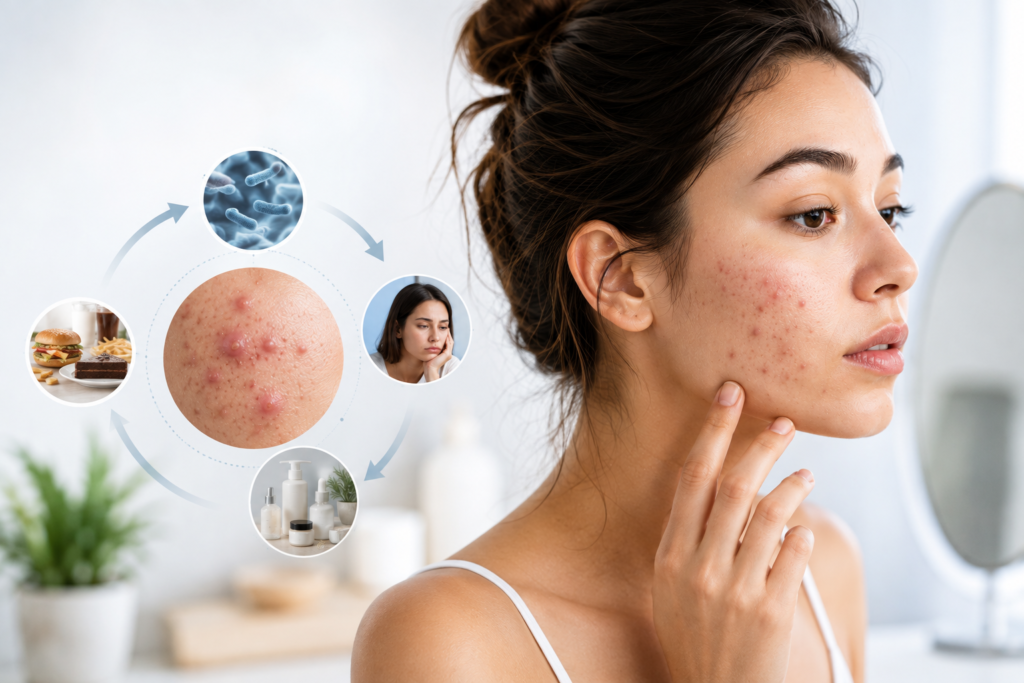
Why acne keeps coming back is a question with a fairly consistent answer: acne is a cyclical, multifactorial condition rather than a one-time infection that resolves permanently after a single course of treatment. Hormonal activity, clogged pores, bacterial overgrowth, and lifestyle factors continue to influence the skin long after visible symptoms subside. Recurring acne most often results from hormonal fluctuations, inconsistent skincare practices, premature discontinuation of treatment, or an unaddressed underlying trigger. Effective, lasting improvement requires identifying the root cause with a qualified dermatologist and following a structured, long-term maintenance plan rather than treating acne as an isolated event.
What Is Recurring Acne?
Recurring acne refers to the reappearance of breakouts after a period of clearer or improved skin, frequently affecting the same regions of the face, such as the jawline, chin, or cheeks. In most cases, this pattern does not indicate that a previous treatment failed outright; rather, it suggests that an underlying contributing factor remains active beneath the surface.
Causes
There is rarely a single cause behind persistent breakouts. The most common causes of recurring acne include:
- Hormonal fluctuations, particularly around menstrual cycles, PCOS, or periods of elevated stress
- Excess sebum production, which clogs pores faster than the skin can naturally clear them
- Cutibacterium acnes bacteria proliferating within blocked follicles
- Comedogenic skincare or cosmetic products that obstruct pores over time
- Dietary triggers, such as high-glycemic foods or dairy, in certain individuals
- Genetic predisposition to acne-prone skin
- Premature discontinuation of treatment once visible symptoms improve
Types
Recurring acne can present in several distinct forms:
- Comedonal acne — blackheads and whiteheads
- Inflammatory acne — red, tender papules and pustules
- Cystic acne — deep, painful nodules with a higher likelihood of scarring
- Hormonal acne — breakouts concentrated along the jawline, often linked to monthly hormonal cycles
Who Is Affected
While acne is commonly associated with adolescence, a significant proportion of adults in their late twenties, thirties, and forties also experience it. Hormonal changes, occupational stress, and environmental pollutants contribute to breakouts regardless of age.
Why Acne Returns After Treatment
Understanding why acne returns after treatment requires looking beyond the treatment itself. In most cases, the issue is not that the treatment was ineffective, but that it addressed the visible symptoms without resolving the underlying biological trigger.
Topical creams and short courses of antibiotics typically reduce active breakouts and inflammation; however, they do not always regulate the hormonal signals or oil gland activity responsible for the initial flare-up. Once treatment stops, these underlying processes can resume, allowing new breakouts to form.
This is a key reason acne keeps coming back after treatment for a large number of patients: the surface-level symptom is managed, but the internal driver remains unaddressed.
Additional contributing factors include:
- Frequent changes in skincare products, which can disrupt the skin barrier
- Picking or squeezing pimples, which reintroduces bacteria into the skin
- Use of unclean or expired cosmetic tools and makeup
- Irregular sleep patterns and chronic stress, which elevate cortisol and oil production
- Discontinuing prescribed medication as soon as visible improvement occurs
Treatment Options Compared
Selecting the best treatment for recurring acne depends on the severity of the condition, skin type, and the pattern of previous breakouts. The comparison below outlines commonly recommended options.
| Treatment | Best For | How It Works | Downtime |
| Topical Retinoids | Mild to moderate acne | Unclogs pores and accelerates cell turnover | Minimal; mild peeling possible |
| Oral Antibiotics | Inflammatory acne | Reduces bacterial load and inflammation | None |
| Hormonal Therapy | Hormonal or adult acne | Regulates androgen-driven oil production | None |
| Chemical Peels | Comedonal acne, uneven texture | Exfoliates and clears pore blockages | 1–3 days of mild redness |
| Laser & Light Therapy | Active acne, associated scarring | Targets bacteria and reduces oil gland activity | Minimal |
| Isotretinoin | Severe cystic acne | Reduces oil gland size long-term | Requires medical monitoring |
Effective persistent acne treatment typically involves a combination of these approaches rather than relying on a single method.
Results & Recovery Timeline
Sessions Needed
Most persistent acne treatment plans require four to six in-clinic sessions, spaced two to four weeks apart, alongside a consistent home-care regimen.
Downtime
Modern acne treatments generally involve minimal downtime. Chemical peels may cause mild redness for a day or two, while laser sessions typically allow patients to resume normal activities the same day.
Expected Improvement
Visible improvement is generally observed between the third and fourth week of treatment, with substantial clearing by weeks eight to twelve. Complete stabilization, particularly for hormonal acne, may take three to six months.
Safety & Who Should Avoid It
Side Effects
Commonly reported, generally mild side effects include:
- Temporary redness or dryness
- Mild peeling associated with retinoids or chemical peels
- Increased sun sensitivity during and after treatment
- Rare instances of pigmentation changes in darker skin tones if aftercare instructions are not followed
Contraindications
Certain treatments may not be suitable for all individuals. Modified or alternative treatment may be required for those who:
- Are pregnant or breastfeeding (isotretinoin and certain retinoids are contraindicated)
- Have active skin infections or open wounds
- Are on blood-thinning medication (relevant to certain laser treatments)
- Have a history of keloid scarring
A thorough consultation with a qualified dermatologist is essential before initiating any treatment plan.
Frequently Asked Questions
1. Why does my acne keep coming back even after using prescribed creams?
Prescribed creams often address visible symptoms rather than the underlying hormonal or bacterial trigger. Without resolving the root cause, breakouts are likely to recur once treatment is discontinued.
2. How can I prevent acne from coming back permanently?
Consistency is essential. Following a dermatologist-approved routine, avoiding picking or squeezing breakouts, managing stress levels, and completing the full course of prescribed treatment all contribute to long-term results.
3. Is recurring acne a sign of an underlying hormonal issue?
It can be, particularly when breakouts are concentrated along the jawline or worsen in correlation with the menstrual cycle. A hormonal evaluation can help clarify this.
4. Can diet contribute to acne’s coming back patterns?
For some individuals, diets high in sugar or dairy can worsen acne. This varies between individuals, so tracking personal triggers is recommended.
5. How long does it take to see results from persistent acne treatment?
Most patients notice visible improvement within four to eight weeks, with more complete results typically evident by the three-month mark.
6. Does stress genuinely contribute to acne relapses?
Yes. Elevated stress increases cortisol levels, which in turn stimulates oil production — a common reason breakouts intensify during periods of high stress.
7. Should treatment be discontinued once the skin clears?
No. Stopping treatment prematurely is one of the most common reasons acne returns. A maintenance plan, even at reduced frequency, helps keep underlying triggers under control.
About the Doctor
Dr. Vani Veggalam — Founder & Managing Director, Cleo Skin Clinic, Hyderabad
- Qualifications: MD in Dermatology, Venereology & Leprosy (MD–DVL) and Diploma in Anesthesiology — a state topper who graduated with distinctions from NTR University of Health Sciences
- Experience: Practising dermatology for over two decades, and running Cleo Skin Clinic’s success stories since 2016
- Clinic Location: Flat No: 13, 2nd Floor, Rd No 1, Opposite GHMC Park, Kukatpally, Hyderabad
- Expertise: Consultant Dermatologist & Laser Surgeon; Fellow of the American Academy of Aesthetic Medicine; member of IADVL, the Association of Cutaneous Surgeons of India, and the Cosmetic Dermatology Society of India; recipient of the Hi9 Best Dermatologist Award (2022) and HMTV Healthcare Award (2023); speaker at international forums including Dubai Derma and Dermacon
Conclusion
Recurring acne is rarely a reflection of treatment failure; rather, it signals that an underlying trigger has not been fully resolved. Whether the cause is hormonal, stress-related, or linked to an incomplete treatment course, understanding why acne keeps coming back is the essential first step toward long-term improvement. With an accurate diagnosis, an appropriate combination of treatments, and consistent follow-through, sustained clarity is a realistic and achievable outcome.
Related pages: Chemical Peels | Laser Treatments | Medi Facials
Further reading: Cleo Skin Clinic Blog
📞 Tired of Acne Keeps Coming Back Again and Again?
Stop the guesswork and start real healing. Book a one-on-one consultation with Dr. Vani Veggalam at Cleo Skin Clinic, Kukatpally, and get a personalized treatment plan designed to stop recurring acne for good.
👉 Book Your Consultation Now | 📟 Call: +91 96669 20777 / +91 95500 05777
Open 9 AM – 10 PM, Monday to Saturday.